
What the OUPV Credential Lets a Charter Captain Do
Documented service affects route and tonnage, while the Coast Guard-issued credential—not course completion—defines actual authority.
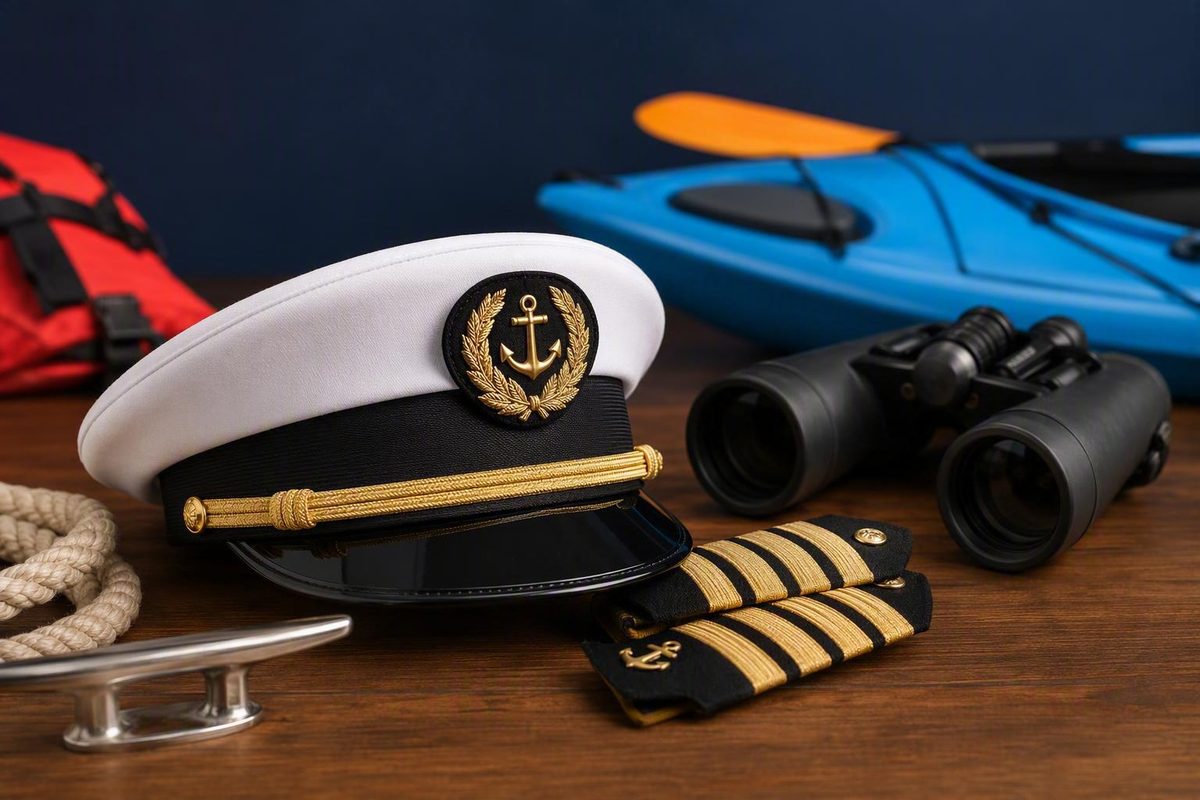
The Six-Pack captain’s license is the U.S. Coast Guard’s National Operator of Uninspected Passenger Vessel of Less Than 100 GRT endorsement, commonly called OUPV. It is intended for qualifying operations on an uninspected passenger vessel carrying six or fewer passengers for hire. The route and tonnage granted depend on documented service and Coast Guard evaluation, so the credential actually issued—not course completion alone—defines where and on what vessel tonnage a captain may operate. Applicants should begin with the current National Maritime Center credential checklist.
Related: What Operators Must Maintain a Proper Lookout?.
Six-Pack license in one minute
“Six-Pack” refers to the limit of six passengers for hire, not automatically to every person aboard.
Common uses include charter fishing, whale watching, SCUBA-diving trips, sightseeing, and tour cruises. The vessel must fit the relevant uninspected-passenger-vessel category, and the issued endorsement must cover the intended waters and tonnage.
The official title matters: the endorsement is for an uninspected passenger vessel of less than 100 gross register tons, not a vessel of exactly 100 GRT. OUPV authority may cover Inland, Great Lakes, or Near Coastal waters, but it is domestic in scope. No OUPV endorsement is valid for an international voyage.
Choose the authority that matches the trip
Passenger count is only the first filter. A captain must also consider the vessel’s inspection status and tonnage, the intended waters, documented service, and the precise authority printed on the credential. The Coast Guard’s charter-boat captain guidance describes the principal OUPV and Master categories.
| Intended operation | Likely credential category | Central limit | What to verify |
|---|---|---|---|
| Six or fewer passengers for hire on protected inland waters | OUPV Inland | Limited to the authorized inland route | Route and tonnage |
| Six or fewer passengers for hire on the Great Lakes | OUPV Great Lakes | Route-specific service is relevant | Great Lakes authority and tonnage |
| Six or fewer passengers for hire in qualifying coastal waters | OUPV Near Coastal | May extend as far as 100 miles offshore, but not automatically | Exact route and offshore authority |
| Restricted institutional operation | Limited OUPV | Approved activity and locality restrictions apply | Scope, locality, and approval conditions |
| More than six passengers on an inspected small passenger vessel | Appropriate Master endorsement | OUPV’s passenger-for-hire limit does not fit | Master authority, route, and tonnage |
Inland, Great Lakes, and Near Coastal describe operating areas. The route and tonnage awarded depend on the applicant’s total documented service, the waters on which that service occurred, and the tonnage of the vessels served.
A qualifying Near Coastal endorsement may authorize operation as far as 100 miles offshore, but that range is not automatic. An applicant’s service and Coast Guard evaluation determine the authority issued, and the credential’s exact wording controls. Near Coastal authority also does not permit an international voyage.
A Limited OUPV may be available for certain activities connected with yacht clubs, marinas, formal camps, or educational institutions. It is restricted to an approved activity and locality and requires prior approval; it is not a general replacement for a standard OUPV endorsement.
The practical passenger divide can be illustrated with two bounded examples:
- Four paying anglers: Taking four paying anglers on a qualifying uninspected charter boat may fit OUPV authority if the vessel, tonnage, route, and issued endorsement all align.
- Eight paying tourists: Carrying eight paying tourists generally points toward an appropriate Master endorsement and an inspected vessel authorized for that passenger service.
Run a cautious eligibility self-check
Use this section only as a preliminary screen. The Coast Guard evaluates eligibility, and the current National Maritime Center checklist controls the application.
Mariners Learning System, a commercial training provider, states a commonly cited threshold of 360 boating-service days since age 16, including 90 days during the preceding seven years. It also describes additional route-specific experience for Near Coastal applicants. These figures can help with initial planning, but they should be checked against current official definitions and requirements rather than treated as the controlling rule. See the provider’s OUPV course and eligibility description.
Before paying for training, ask:
- Can I substantiate my total service rather than estimate it?
- Is enough of my documented service recent?
- On which waters did the service occur?
- What were the tonnages of the vessels served?
- Does that history support the route I intend to request?
- Will the planned operation carry no more than six passengers for hire?
- Is the intended vessel an appropriate uninspected passenger vessel?
Do not assume that time on a personally owned boat automatically qualifies, and do not rely on an unofficial calculation of a sea-service day. Assemble records using the current Coast Guard instructions. Anyone seeking Great Lakes or Near Coastal authority should verify the applicable route-specific requirements instead of relying on a general OUPV summary.
Citizenship also requires careful treatment. Coast Guard guidance states that officer endorsements generally require U.S. citizenship, with a limited exception for certain operators of uninspected passenger vessels not documented under U.S. law. That rule is more specific than a course provider’s broader statement about being legally able to work in the United States; applicants should consult the National Maritime Center’s current merchant mariner credential guidance for the controlling requirement.
Separate training, testing, and licensing
No, passing a Six-Pack course does not make you licensed. A provider course and its examination can produce a course certificate. The applicant must then apply separately to the Coast Guard and submit the applicable supporting material. The Coast Guard—not the school—decides whether to issue a credential and what route and tonnage it authorizes.
Commercial training is one preparation and testing route. It should not be presented as proof that every applicant must buy the same course or that purchasing a course guarantees issuance.
Commercial example, not a recommendation: Mariners Learning System advertises an online OUPV package for $695. Its listing describes 12 months of access, multimedia instruction, mobile or offline materials, an online final exam, chart materials, and two years of application support. Parallels and dividers are not listed as included. The provider describes four exam modules—Chart Plotting, Navigation General, Deck General and Safety, and Rules of the Road—with advertised passing scores of 90% for Chart Plotting and Rules of the Road and 70% for the other two modules. It also says the resulting credential must be renewed every five years. These are the provider’s current representations, not universal Coast Guard examination or renewal rules. Review the provider’s package details.
Keep the three stages distinct:
- Training: Instruction and preparation offered by a school or pursued through another study route.
- Testing or course completion: Evidence that the applicant passed an examination or completed an accepted program.
- Credential issuance: The Coast Guard’s decision following review of the application and supporting documents.
A course certificate may be part of an application pathway, but it does not itself authorize passenger-for-hire operations.
Use an application checklist without guessing at current details
Once the planned operation appears to fit OUPV authority, proceed in this order:
- Define the operation. Record the number of passengers for hire, vessel inspection status, vessel tonnage, intended waters, and whether any trip would involve a foreign destination.
- Obtain the current OUPV checklist. Use the live National Maritime Center version rather than an old download or a school’s summary.
- Assemble acceptable sea-service evidence. Follow the current instructions for documenting service, waters, and vessel details.
- Complete the applicable forms and supporting requirements. The National Maritime Center’s charter-captain materials include application, sea-service, drug-test, and medical-certificate categories, but the exact documents depend on the applicant and transaction.
- Audit every field. Check names, dates, vessel information, signatures, and consistency across the submission.
- Follow current submission instructions. Do not infer that a provider’s online course makes the entire federal credentialing process online or that one submission method applies to every applicant.
- Wait for evaluation and issuance. Do not operate under authority that you merely expect to receive.
A commercial provider also lists physical, drug-testing or exemption, CPR and first-aid, TWIC-related, and sea-service items. Use those only as planning prompts and verify each one against current official instructions. A provider’s list does not establish what applies to every federal application.
The Coast Guard warns that missing information or signatures can delay an application or cause rejection. A line-by-line review is therefore more useful than guessing which older form, procedure, or filing method remains valid. Applicants considering an examination outside a commercial course should consult the National Maritime Center’s current examination guidance before choosing a path.
Budget beyond course tuition and plan for renewal
There is no supported single total that applies to every applicant. Separate optional training from government, documentation, and third-party expenses:
| Budget item | Your estimate |
|---|---|
| Commercial training, if chosen | $_____ |
| Parallels, dividers, or other plotting tools | $_____ |
| Medical services and documentation | $_____ |
| Drug-testing compliance | $_____ |
| CPR and first-aid training, if applicable | $_____ |
| TWIC-related costs, if applicable | $_____ |
| Government fees | $_____ |
| Optional books, charts, or study materials | $_____ |
| Travel, postage, copies, or record retrieval | $_____ |
| Planning total | $_____ |
An advertised course price is tuition for that particular package, not the total cost of obtaining a credential. The final amount depends on the training route selected and the supporting steps that apply to the individual applicant.
Renewal should also be treated as an ongoing obligation rather than an afterthought. Consult current Coast Guard renewal instructions before relying on a particular renewal method, sea-service option, examination pathway, form, or fee.
The decision comes down to three steps: confirm that the proposed trip carries no more than six passengers for hire on a qualifying uninspected vessel; match the intended waters to a route supported by documented service; and obtain the current National Maritime Center checklist before paying for training or submitting forms. A course certificate is not the license—the Coast Guard-issued credential defines the captain’s actual authority.
Can I use a Six-Pack license for an international voyage?
No. The Coast Guard states that no OUPV endorsement is valid for international voyages. A Near Coastal endorsement does not remove that prohibition. See the official charter-boat captain guidance.
Can a Near Coastal OUPV license let me operate up to 100 miles offshore?
Potentially. A qualifying Near Coastal endorsement may extend as far as 100 miles offshore, but that authority is not automatic. Documented service and Coast Guard evaluation determine what is issued, and the credential’s wording controls. Verify the requested and granted authority against the current National Maritime Center checklist.
Do I have to buy a Six-Pack course?
Check current National Maritime Center examination and application instructions to determine the available pathway for your transaction. Regardless of the testing route, the Coast Guard must evaluate the application and issue the credential before the applicant has OUPV authority.