
The Right Sub-$1,000 Kayak Depends on Where—and How—You Paddle
A kayak advertised at $999 can exceed a $1,000 total budget once tax, delivery, a paddle, a life jacket, and transport hardware are included.
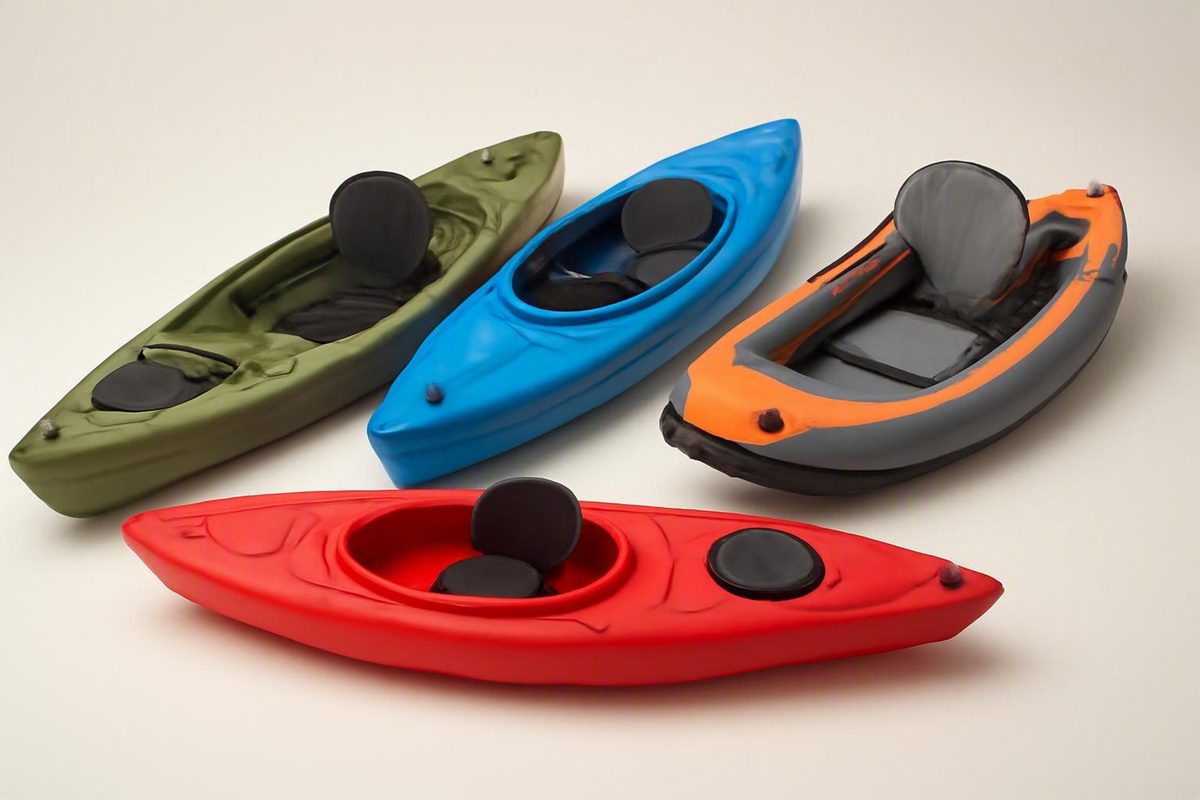
Searching for the best kayaks under 1000 dollars produces an awkward mix of fishing platforms, recreational hard shells, inflatables, folding boats, temporary sale prices, and bare-hull specifications. Those products are not interchangeable, and the available evidence does not support one winner for every paddler.
The more defensible approach is to start with your primary water and activity, then compare paddler fit, equipped carrying weight, storage, transport, and launch-ready cost. A feature-rich fishing kayak may work well on a calm lake yet be too burdensome to roof-load. A kayak advertised at $999 can exceed a $1,000 total budget once tax, delivery, a paddle, a life jacket, and transport hardware are included.
Research note: This guide synthesizes external testing, manufacturer specifications, publisher guides, retailer snapshots, archived material, and a limited number of clearly labeled owner accounts. It is not a comprehensive hands-on test of every kayak category. Prices and specifications should be verified for the exact model year and package before purchase.
The short list: strongest sub-$1,000 options by use case
Start with the use case closest to what you will do most often. These are candidates to investigate, not a universal ranking.
| Primary use | Kayak | Why it belongs on the short list | Published price basis |
|---|---|---|---|
| Feature-rich calm-water fishing | Vibe Sea Ghost 110 | Storage, customization, strong handles, tested tracking, and an included rudder. Field & Stream named it best overall after testing five sub-$1,000 fishing kayaks—not the entire kayak market. | $999 in Field & Stream’s 2026 test; Vibe separately lists a $999.99 starting MSRP. |
| Lower-cost tested fishing | Magellan Outdoors Pro Angler | Comfortable seating, a practical layout, and relatively low reported weight, balanced against lower stability than some boats in the same test and no rudder. | $699 in Field & Stream’s 2026 test. |
| Compact-value fishing | Pelican Catch Classic 100 | A 10-foot platform with an adjustable seat, gear rails, and rod holders. | $599.99 publisher-reported 2025 MSRP, not a verified current price. |
| Portable hard-shell fishing | Vibe Skipjack 90 | A short hull and listed 46-pound hull weight make transport and storage its central appeal. | $599.99 starting MSRP; the stated weight excludes the seat and accessories. |
| Budget inflatable; solo or tandem recreation | Sea Eagle 370 | Packs into a small space, weighs less than most fishing hard shells, and can be configured for one or two paddlers. Paddling Magazine selected it as its best-budget kayak. | $399 Pro Package MSRP in a 2025 guide. |
| Folding storage | Oru Inlet | A 20-pound folding candidate for buyers whose home or vehicle cannot accommodate a full-length hard shell. Paddling Magazine selected it as its folding pick. | $899 MSRP in a 2025 guide. |
| Lightweight recreational hard shell | Pelican Argo 100X | A 10-foot, one-seat recreational candidate with a listed 36-pound weight. | Archived July 2024 recommendation; the available archive does not display a price. |
Field & Stream’s test provides the strongest comparative support in this guide for the Sea Ghost and Magellan. Its reviewer praised the Sea Ghost’s tracking, storage, customization, handles, and rudder while describing stability as middling and steering it toward lakes, ponds, and other calm fisheries rather than rocky creeks or swift rivers. The Magellan was the test’s budget pick at a reported $699, with seat comfort, layout, affordability, and low weight identified as strengths. See the five-boat test and its published specifications.
Vibe lists the nine-foot Skipjack 90 at a $599.99 starting MSRP, with a 46-pound hull weight and 300-pound capacity. Its guide states that listed weights exclude seats and accessories, so 46 pounds is not necessarily the amount you will lift after outfitting the kayak. The same guide lists the Sea Ghost 110 at a $999.99 starting MSRP. Compare Vibe’s manufacturer-listed models and weight definitions.
Paddling Magazine’s two portable selections solve different problems. Its 2025 guide lists the inflatable Sea Eagle 370 at 32 pounds, with a packed size of 31 by 19 by 8 inches and a $399 Pro Package MSRP. It lists the folding Oru Inlet at 20 pounds and an $899 MSRP. Review the guide’s category selections and specifications.
The Argo 100X comes from a Kayaks Hub article preserved in a July 2024 archive. The archived page identifies it as a lightweight recreational candidate but does not show a price in the available material. It is therefore a lead for current investigation, not proof of present availability or sub-$1,000 pricing.
Price key
- MSRP: A suggested price published by a manufacturer or reported by a publisher. It may differ from a dealer’s price and generally excludes tax and delivery.
- Editorially reported price: A price shown when an article or test was published. It is not a standing offer.
- Retailer sale price: A temporary storefront price that may depend on inventory, color, location, or delivery eligibility.
- Archived recommendation: Historical information that can identify a model but does not establish current price, specifications, or availability.
Before ordering, verify the model year, current price, stock, tax, delivery restrictions, package contents, and whether the seat, paddle, rudder, plugs, pump, or carrying bag are included.
Choose the kayak category before choosing the model
Begin with the water and activity you expect to encounter most often:
- Calm-water recreation: Prioritize fit, manageable weight, uncomplicated handling, and a comfortable seat.
- Fishing: Examine storage access, rod and accessory placement, paddle management, seat position, tracking, and suitability for your actual water.
- Tandem outings: Confirm usable seating room and total capacity for both paddlers and everything they will carry.
- Compact storage: Compare packed dimensions, setup time, drying needs, and the full trip from home to vehicle to launch.
- Longer-distance paddling: Give more attention to efficient forward travel, tracking, foot and seat fit, and protection from weather.
A sit-on-top has an open seating area. This format commonly favors accessible entry and exit, open deck storage, water re-entry, and fishing layouts. Rod holders, gear tracks, crates, and tank wells can remain within reach. That does not make every sit-on-top equally stable, efficient, or beginner-friendly.
A sit-inside places the paddler in a cockpit, where contact at the hips, thighs, and feet can support more precise control. The deck and an appropriate spray skirt can offer more protection from weather and cold water. Sit-inside designs commonly emphasize control and paddling efficiency, but the category ranges from short recreational boats to specialized touring kayaks. Cockpit style alone does not prove that a kayak is fast, seaworthy, or appropriate for demanding trips. Old Town’s category guidance makes similar distinctions while warning that the general rules do not apply to every hull. Read its sit-in versus sit-on-top overview.
Portability also takes three different forms:
- Portable hard shell: Ready to launch without inflation or assembly, but it still requires sufficient storage length and a workable vehicle arrangement.
- Inflatable: Can solve apartment, trunk, or travel-storage problems, but requires inflation, deflation, drying, and inspection of chambers, seams, and valves.
- Folding kayak: Reduces storage volume without inflatable chambers, but requires assembly and attention to the manufacturer’s operating and care instructions.
Conversely, a heavy fishing hard shell is not the better purchase if its weight prevents you from reaching the water independently.
The evidence reviewed for this guide is weighted heavily toward paddle-driven sit-on-top fishing kayaks. Coverage of recreational hard shells, touring boats, tandems, inflatables, and folding designs is thinner. A longer fishing shortlist should not be mistaken for evidence that a fishing kayak is the correct default for casual recreation.
The archived Driftsun Almanor and BKC SK287 can be treated as additional leads, but not as independently tested touring winners. The archive reports specifications and publisher assessments without documenting a comparative test, and it does not establish current prices. Confirm the current model, construction, package contents, intended water, and availability before considering either boat.
Fishing kayaks: compare features, weight, and water suitability
Within the evidence reviewed, the most substantive comparison is among paddle-driven sit-on-top fishing kayaks. Even here, weights are not fully standardized: some sources identify bare hull weight, while others report an editorial test specification or do not clearly define what is included.
| Model | Published dimensions and weight | Listed capacity | Published price basis | Intended priority and trade-off |
|---|---|---|---|---|
| Vibe Sea Ghost 110 | Field & Stream: 11 ft 6 in, 33 in wide, 84 lb, with the weight basis not clarified in the supplied material. Vibe: 11 ft and 62 lb hull weight. | 425 lb | $999 in Field & Stream’s test; $999.99 Vibe starting MSRP | Storage, customization, tracking, handles, and an included rudder for calm-water fishing; middling stability in the field test. |
| Bonafide RS117 | 11 ft 7 in; 65 lb, basis not specified | 425 lb | $999 publisher-reported 2025 MSRP | Standable-platform design, adjustable seat, gear tracks, and open plus watertight storage; standing remains paddler- and condition-dependent. |
| Native Watercraft Falcon 11 | 11 ft; 60 lb, basis not specified | 325 lb | $999 publisher-reported 2025 MSRP | A narrower, comparatively faster fishing layout with an adjustable seat, storage, and accessory provisions. |
| Feelfree Moken 10 V2 | 10 ft; 69 lb, basis not specified | 440 lb | $799 publisher-reported 2025 MSRP | High listed capacity, fishing fittings, and a built-in transport wheel; capacity does not establish fit or easy handling. |
| Pelican Catch Classic 100 | 10 ft; 34 in wide; 57 lb hull weight | 350 lb | $599.99 publisher-reported 2025 MSRP | Compact value with adjustable seating, gear rails, and rod holders. |
| Magellan Outdoors Pro Angler | 10 ft 3 in; 30 in wide; 63 lb, with the weight basis not clarified in the supplied material | 325 lb | $699 in Field & Stream’s test | Comfortable seat, useful layout, affordability, and lower test weight; less stable than some tested boats and no rudder. |
Except for the Magellan figures and Field & Stream’s Sea Ghost measurements, the specifications and prices above are publisher-reported 2025 figures from Bending Branches, not guaranteed current retail facts. That guide presents the Catch Classic as a compact value candidate, the Moken as a high-capacity design with a transport wheel, the Falcon as narrower and comparatively faster, and the RS117 as a storage-rich platform intended to support standing. See the 2025 specifications and feature lists.
Vibe Sea Ghost 110
The Sea Ghost has the strongest external comparative support in this evidence set as a feature-rich fishing candidate near the top of the budget.
Its conflicting measurements matter. Field & Stream reported an 84-pound test specification at 11 feet 6 inches, whereas Vibe lists an 11-foot hull weighing 62 pounds. Model-year or measurement differences might explain some of the gap, but the available evidence does not resolve it. Ask the seller to identify the exact model year and state whether the quoted weight includes the seat, rudder, controls, hatch fittings, and removable accessories.
In the field test, the reviewer found that the Sea Ghost tracked well and praised its storage, customization, handles, and included rudder. The same reviewer described stability as middling and did not consider it ideal for rocky creeks or swift rivers. It is therefore a defensible calm-water fishing candidate, not an all-water recommendation.
Magellan Outdoors Pro Angler
The Magellan occupies a lower price tier. Field & Stream reported a 10-foot-3-inch length, 30-inch width, 63-pound weight, 325-pound capacity, and $699 price. The reviewer praised its seat comfort, layout, affordability, and low weight while finding it less stable than some other boats in the five-kayak test and noting the absence of a rudder. Those figures and observations come from the same 2026 comparison.
That combination may appeal to an angler who values a simpler platform and easier on-land handling over maximum rigging capacity. It may be less attractive to someone prioritizing a stand-up layout or rudder-assisted control. Paddler dimensions, balance, loading, and local conditions matter more than a generic stability label.
Pelican Catch Classic 100
The Catch Classic 100 offers a lower published entry point than the near-$1,000 boats. Bending Branches reported a $599.99 2025 MSRP, 10-foot length, 34-inch width, 57-pound hull weight, and 350-pound capacity. Its listed equipment includes a dual-position adjustable seat, gear rails, and two flush-mounted rod holders.
This is best treated as a compact-value candidate. Its lower published price may preserve room for a paddle, life jacket, and transport equipment. Buyers should not infer comfort or safe standing from width alone, and the evidence does not establish it as the preferred choice for repeatedly covering long distances.
Feelfree Moken 10 V2
The Moken 10 V2 stands out in the comparison for its 440-pound listed capacity and 69-pound published weight. Its listed fishing equipment includes rail tracks, bungee storage, rod holders, paddle keepers, and a built-in transport wheel.
Likewise, the capacity figure does not establish seat width, freeboard under a particular load, or comfort for an individual paddler.
Native Watercraft Falcon 11
The Falcon 11 is the narrower, comparatively faster candidate in the publisher’s group. Its listed specifications are 11 feet long, 60 pounds, and a 325-pound capacity. Published features include rod holders, gear tracks, bow and stern storage, a height-adjustable seat, and transducer-customization provisions.
That layout may appeal to anglers who want to cover more water without moving to a specialized touring boat. “Faster” remains a relative publisher characterization, not a guaranteed result for every paddler, load, or condition.
Bonafide RS117
The RS117 combines a reported 425-pound capacity with a two-position seat, gear tracks, and open and watertight storage. The publisher describes it as having a standable platform.
Treat “standable” as a design intention rather than a blanket safety assurance. Whether standing is practical depends on the paddler, gear placement, and conditions. A boat that feels steady on sheltered water can behave differently in wind, current, waves, or boat wake.
Retailer snapshots have displayed the Sea Ghost, RS117, Falcon 11, Moken 10 V2, and Catch Classic below $1,000. Those listings are not evergreen offers: prices and inventory can change, and delivery can be geographically restricted. In the supplied retailer snapshot, every displayed kayak was marked local-delivery-only, while several Pelican models were sold out. See the retailer collection for examples of sale and stock limitations.
Portable, recreational, folding, and tandem alternatives
If you do not need gear tracks, rod holders, tackle storage, or a raised fishing seat, a simpler recreational or portable kayak may be a better match.
Pelican Argo 100X
The Pelican Argo 100X is an archived lightweight recreational candidate. The July 2024 archive lists:
- One seat
- 10-foot length
- 36-pound weight
- 275-pound capacity
- Plastic construction
- Twin-arched multi-chine hull
- Padded backrest and seat cushion
- Molded footrests
The archived account also identifies limited front storage and nonadjustable molded footrests as drawbacks. Fixed foot positions deserve attention because capacity alone says nothing about whether your legs, hips, and paddling posture will be comfortable.
The archived article does not display a price for the Argo, so it cannot establish that a current version is available below $1,000. Treat it as a model to investigate if low hard-shell weight matters more than fishing equipment.
Sea Eagle 370
Paddling Magazine selected the Sea Eagle 370 as its best-budget kayak and listed the Pro Package at a $399 MSRP in its 2025 guide. The inflatable can be configured for solo or tandem use and was reported at 12 feet 6 inches long, 34 inches wide, and 32 pounds, with a 650-pound stated capacity and a packed size of 31 by 19 by 8 inches.
Its principal attractions are low packed volume, relatively low carrying weight, seating flexibility, and a published price that leaves more of the budget available for other equipment. The source also notes less rigidity and performance than a typical sit-on-top or sit-inside recreational hard shell and advises choosing another kayak for regular whitewater beyond class II.
A 650-pound stated capacity does not guarantee comfortable space for two adults, a child, a dog, or expedition gear. Confirm the seating positions and usable interior room, and count everything carried.
Oru Inlet
The Oru Inlet is the folding-storage candidate. Paddling Magazine lists it at 20 pounds, 9 feet 8 inches long, and 31 inches wide, with a 275-pound capacity and $899 MSRP. The reviewer reported assembling it in seven minutes on a first use and finding it more stable than expected. Those specifications and observations appear in the magazine’s 2025 guide.
The available review excerpt is incomplete, so it does not support broad claims about long-term durability or difficult-water performance. Its demonstrated appeal is compact storage and low listed weight. At an $899 MSRP, however, it leaves little room inside a strict $1,000 launch-ready budget.
Driftsun Almanor
The archived two-seat Driftsun Almanor is another portable tandem lead rather than a current recommendation. Its listed specifications include a 33-pound weight, 400-pound capacity, PVC-nylon construction, carrying bag, and approximately 10-minute stated inflation time.
The archived account also warns that it may feel narrow for larger adults and that internal handles may become uncomfortable on longer outings. Those observations illustrate why tandem capacity cannot substitute for checking seating room and fit.
These alternatives should not be ranked directly against the Sea Ghost or RS117 as though they solve the same problem. A heavily equipped fishing platform prioritizes accessible gear and on-water organization. The Argo emphasizes lightweight simplicity, the Sea Eagle compact inflatable transport and tandem flexibility, and the Oru folding storage.
Stability, tracking, maneuverability, and speed: understand the trade-offs
Width, length, and weight provide clues, but they do not tell the whole story.
Wider fishing kayaks often emphasize initial stability, deck room, and capacity. Longer or narrower boats may maintain direction and cover distance with fewer corrections.
Shorter kayaks can be easier to turn, store, carry, and transport. That makes a nine- or 10-foot boat attractive for small ponds, narrow launches, and limited storage. Longer boats commonly track and cover distance more readily, but require more storage length and may be more difficult to handle on land. On The Water’s buyer’s guide discusses these trade-offs and recommends demoing finalists rather than relying on specifications alone. See its guidance on hull design, transport, water type, and demos.
The Sea Ghost demonstrates why one-word ratings are misleading. Field & Stream’s reviewer praised its tracking but rated its stability as middling and preferred it for calm fisheries rather than swift, rocky water. A calm-lake angler may consider that a reasonable trade; someone who repeatedly paddles shallow moving water should not assume the same conclusion applies.
A “standable platform” label is equally conditional. Paddler balance and body size matter, as do seat height, deck geometry, load placement, wind, current, wake, and waves. Do not treat a standing demonstration in sheltered water as proof that standing is appropriate in every setting.
Buy for the water you will use most often. A paddler using a protected neighborhood lake should not accept an unmanageable boat merely to prepare for a hypothetical offshore trip. Conversely, a compact calm-water kayak should not be pushed into conditions it was not selected to handle.
When possible, demo each finalist with its normal seat and basic equipment installed:
- Enter and exit from a dock, bank, or beach similar to your normal launch.
- Adjust the foot braces and seat through their usable ranges.
- Notice how the kayak feels while sitting still.
- With appropriate instruction and supervision, lean gradually to understand how the hull responds as it moves off level.
- Paddle straight without relying on a rudder.
- Make controlled turns in both directions.
- Stop, reverse, and approach a landing.
- Simulate reaching to the side and behind you for gear.
- Where appropriate to the boat, water, conditions, and your training, practice re-entry with qualified supervision.
- Carry the kayak over a realistic distance.
- Confirm that you can load it using the vehicle and rack arrangement you actually intend to use.
A kayak that looks ideal in a table can be eliminated immediately by an awkward seat, poor leg position, difficult entry, or unmanageable loading process.
Capacity and fit: why the maximum weight rating is not enough
Before comparing capacity figures, total everything that will be carried:
- Paddler or paddlers
- Clothing and footwear
- Life jacket
- Water and food
- Paddle and spare equipment
- Seat, if excluded from the hull specification
- Fishing tackle and rods
- Dry bags
- Anchor equipment
- Electronics and battery
- Cart or other equipment carried aboard
- Child, pet, or camping load where relevant
Do not apply an arbitrary universal payload percentage. Manufacturers use different designs and rating methods, and the supplied evidence does not support one margin that works for every kayak and condition.
Maximum capacity also does not establish cockpit or deck room. It cannot tell you whether the seat is wide enough, the foot braces extend far enough, the kayak maintains suitable freeboard under your load, or the boat will feel comfortable and manageable.
The compact fishing candidates illustrate the range:
| Kayak | Listed capacity | Figure source |
|---|---|---|
| Vibe Skipjack 90 | 300 lb | Vibe manufacturer guide |
| Native Watercraft Falcon 11 | 325 lb | Publisher-listed 2025 specification |
| Magellan Outdoors Pro Angler | 325 lb | Field & Stream test |
| Pelican Catch Classic 100 | 350 lb | Publisher-listed 2025 specification |
| Bonafide RS117 | 425 lb | Publisher-listed 2025 specification |
| Vibe Sea Ghost 110 | 425 lb | Field & Stream and Vibe |
| Feelfree Moken 10 V2 | 440 lb | Publisher-listed 2025 specification |
The Skipjack and Vibe Sea Ghost figures come from Vibe’s promotional guide; the Catch Classic, Falcon, RS117, Moken, and publisher-listed Sea Ghost figures come from the Bending Branches guide. The Magellan figure comes from Field & Stream. Because those sources do not define included equipment consistently, the figures should not be treated as fully standardized.
Fit anecdotes may identify a boat worth trying, but they cannot guarantee suitability. A Florida kayak-fishing guide reports using an Ascend FS 128T with clients as tall as 6 feet 6 inches and weighing 300 pounds. He also describes the kayak as nearly 13 feet long and about 100 pounds, which could create a significant on-land handling problem. Read the guide’s firsthand fit and transport account.
Larger, taller, or mobility-limited paddlers should personally assess:
- Seat-base and backrest width
- Hip and thigh space
- Foot-brace range or molded footrest positions
- Knee angle during a normal paddling stroke
- Entry and exit at the expected launch
- Stability while reaching for equipment
- The ability to move and load the kayak without injury or dependence on an unavailable helper
A boat can support your total weight on paper and still be the wrong fit.
The real budget: kayak price versus launch-ready cost
Decide which budget you mean before shopping:
- A kayak-only ceiling covers the hull or advertised package before tax, delivery, and missing equipment.
- A launch-ready ceiling covers the equipment and transport arrangement needed to use the kayak appropriately.
Depending on the boat and intended activity, the second budget may include:
- Properly fitted life jacket
- Suitable paddle
- Signaling or other safety equipment appropriate to local rules and conditions
- Tie-downs, rack components, or trailer equipment
- Kayak cart
- Delivery charges and tax
- Dry storage
- Bilge pump, paddle float, spray skirt, or other design-appropriate equipment
- Fishing, camping, or electronics accessories
Check the rules that apply in the jurisdiction where you launch rather than assuming one national equipment list covers every trip.
A kayak listed at $999 or $999.99 is below the threshold only as a pre-tax, pre-delivery kayak purchase. It leaves essentially no room for a paddle, life jacket, or transport hardware.
Bending Branches suggests reserving 20% to 30% of the budget for a paddle. That is commercial guidance, not a universal requirement: the publisher sells paddles. The useful takeaway is simply that the paddle should be budgeted before committing nearly the entire amount to the hull.
Three planning bands are more practical:
- Lower-priced hull: Preserves room for essential paddling and transport equipment. The published prices for the Sea Eagle, Catch Classic, Skipjack, and Magellan fall broadly into this category.
- Midrange hull: May allow selected upgrades while remaining near a $1,000 launch-ready target, depending on tax, delivery, and included equipment.
- Near-$1,000 hull: Consumes almost the entire limit before other necessities and will usually require a larger all-in budget unless suitable gear is already owned.
Accessories can accumulate quickly. In an unverified 2020 forum post, a Lifetime Yukon owner reported spending about $1,500 on the kayak plus a paddle, life jacket, motor, battery, anchor setup, fish finder, storage hoist, dolly, tie-downs, and other accessories. That is a dated individual account—not a typical or current total—but it illustrates how a modestly priced hull can become a much more expensive system. See the forum discussion and reported equipment breakdown.
A used, already-equipped kayak can offer better value than a new bare hull, but inspect it methodically:
- Sight along the hull for deformation, deep wear, cracks, repairs, or oil-canning.
- Examine the seat frame, fabric, adjustment hardware, and attachment points.
- Operate the rudder, steering controls, cables, and pedals where fitted.
- Open every hatch and inspect its cover and seal.
- Check handles, gear tracks, drain plugs, scuppers, and fittings.
- Identify missing fasteners, proprietary parts, or mounting hardware.
- For an inflatable, inspect chambers, seams, floor, valves, patches, and signs of leakage.
- Confirm which accessories are included and whether they fit you.
- Price missing equipment and replacement parts before comparing the deal with a new kayak.
For every candidate, record the final delivered price and exact package contents. A low headline price may lose its advantage after freight, tax, a missing seat, and required transport equipment are counted.
How to make the final choice safely
Before paying, verify:
- Primary water: Pond, lake, slow river, sheltered coast, or another environment
- Primary activity: Recreation, fishing, tandem outings, fitness, or compact travel
- Paddler fit: Seat, hips, thighs, foot position, reach, and mobility needs
- Complete carried load: People, clothing, safety equipment, food, water, and activity gear
- Bare versus equipped weight: Whether the figure includes the seat, rudder, controls, and accessories
- Home storage: Full dimensions and access route, not just nominal boat length
- Vehicle compatibility: The vehicle and rack manufacturer’s limits, crossbar arrangement, tie-down points, and loading height
- Launch method: Ramp, dock, beach, steep bank, stairs, or long carry
- Included equipment: Seat, paddle, rudder, plugs, pump, repair kit, or carrying bag
- Current delivered price: Product, tax, freight, local-delivery fees, and assembly
- Return policy: Particularly when a demo is unavailable
- Replacement components: Current availability of seats, hatch covers, rudder parts, valves, and proprietary fittings
Do not accept an unlabeled weight figure. The Sea Ghost discrepancy—62 pounds as Vibe’s stated hull weight versus 84 pounds in Field & Stream’s test specification—shows why you must ask exactly what is being measured. That difference could determine whether you can load the boat independently or need a cart, trailer, or helper.
Verify stock and shipping before organizing a purchase around a sale. A retailer may show a sub-$1,000 price while limiting delivery to a local area or marking the model sold out.
The evidence reviewed here does not establish a strong new pedal-drive kayak below $1,000. The supported fishing recommendations are primarily paddle-driven. This guide also does not provide a model-specific recommendation for offshore paddling, regular whitewater, swift rivers, surf launches, or rough coastal conditions.
Account for weather, water temperature, current, waves, traffic, load, and your skill level. Wear a properly fitted life jacket; the site’s own general water-safety notice also directs paddlers to put water safety first and wear one. Read that notice in context.
The decision rule is straightforward: choose the lightest and simplest kayak that comfortably fits you, your complete load, your transport arrangement, and the water and activity you encounter most often. Do not pay for the longest feature list if those features make the boat too heavy, costly, or difficult to use.
The Sea Ghost 110 has the strongest support in this evidence set as a feature-rich calm-water fishing candidate. The Magellan Pro Angler and Catch Classic 100 occupy lower published fishing price tiers, while the Skipjack 90 prioritizes hard-shell portability. The Sea Eagle 370 addresses budget inflatable and tandem use, and the Oru Inlet addresses folding storage. For every finalist, verify the delivered price, equipped weight, fit, capacity, package contents, and current specifications—and demo it when possible.
What is the best fishing kayak under $1,000?
There is no universal best, but the Vibe Sea Ghost 110 is the strongest-supported feature-rich candidate in this guide for calm-water fishing. Field & Stream named it best overall in a five-boat sub-$1,000 test and praised its tracking, storage, customization, handles, and included rudder. The reviewer also described its stability as middling and did not favor it for rocky creeks or swift rivers.
For a lower published price, the Magellan Outdoors Pro Angler was the same test’s budget pick at a reported $699. The Pelican Catch Classic 100 is another compact candidate based on its publisher-reported $599.99 2025 MSRP. Neither figure should be treated as a guaranteed current offer.
Can I buy a kayak, paddle, and PFD for less than $1,000 total?
Potentially, if you choose a lower-priced hull and avoid high delivery or transport costs. Treat that as a planning scenario rather than a guaranteed package total: taxes, paddle choice, life-jacket fit, racks, tie-downs, and shipping vary.
A kayak priced at $999 or $999.99 leaves essentially no room for those items within the same ceiling. Compare the final delivered, launch-ready total rather than the hull’s advertised price.
Should a beginner choose a sit-on-top or sit-inside kayak?
Choose according to water, weather, fit, mobility, and intended use rather than experience level alone.
A sit-on-top commonly provides accessible entry and exit, open storage, easier water re-entry, and fishing-friendly layouts. A sit-inside commonly offers closer boat control and more protection from weather and cold water. Individual hull design matters more than the category label, so beginners should try both formats where possible.
Are inflatable and folding kayaks under $1,000 worth considering?
Yes, particularly when home storage or vehicle transport would prevent you from using a hard shell.
The Sea Eagle 370 is the strongest-supported budget inflatable here. It can be configured for solo or tandem use and packs into a relatively small space, although the cited review notes less rigidity and performance than a typical recreational hard shell.
The Oru Inlet is a lightweight folding alternative for compact storage. Its listed $899 MSRP uses most of a $1,000 hull budget, and the available review excerpt is not complete enough to support broad durability or difficult-water conclusions.
Can I get a new pedal-drive kayak under $1,000?
Discounts or local offers may appear, but the evidence reviewed for this guide does not establish a strong new pedal-drive recommendation below $1,000. The supported fishing candidates are predominantly paddle-driven sit-on-tops.
Do not choose an unfamiliar pedal-drive model solely to meet a headline price. Confirm the complete package, equipped weight, drive installation, parts availability, current delivered price, fit, and suitability for your water. If hands-free propulsion is essential, a used and inspectable kayak from an established model line may be more defensible than an unsupported new bargain.