
Check the Wind for Your Whole Kayak Trip—not Just the Launch
Check wind speed, gusts, direction and waves before kayaking, then compare the forecast with your route, return time and conditions at the launch.
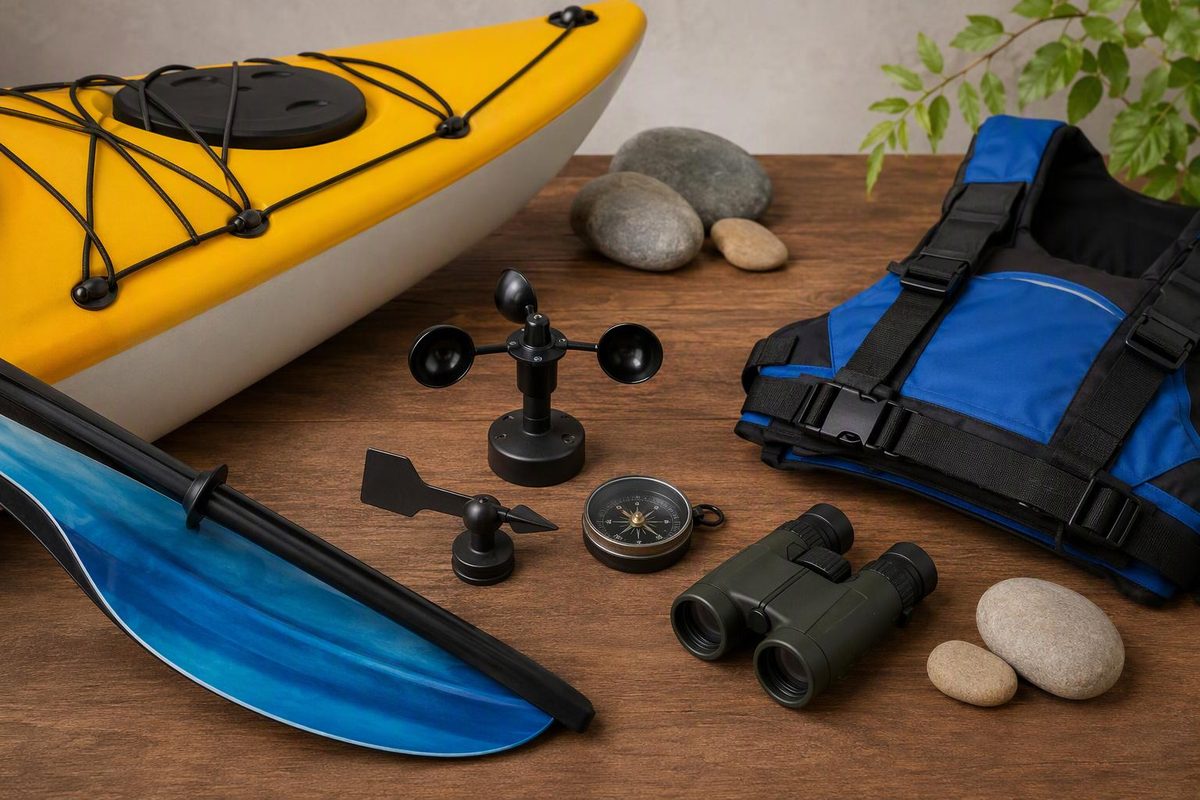
Check wind speed, gusts and direction for the whole outing, including your return, then compare that forecast with current observations and the water at your launch. A single wind number in a weather app is not enough to decide whether to paddle.
1. Open the forecast for the water you’ll paddle
For U.S. coastal waters and the Great Lakes, start with NWS Marine Weather Services. Select your area, read the marine zone forecast and any alerts, then open a point forecast and hourly graph where available. Check exposed parts of your route—not only the launch. A point forecast describes one small area; NWS recommends also checking the surrounding zone forecast. Its marine forecast guide explains the difference.
For an inland lake or river without a marine forecast, use the local hourly weather forecast and alerts. Outside the U.S., use the equivalent national weather service’s local or marine forecast.
Check the issue date, valid hours and time zone. Look from launch through your expected return, with extra time for delays. Refresh the forecast before leaving home and again before launching.
2. Read these fields together
| Field | What to check |
|---|---|
| Sustained wind | The expected background wind throughout the trip—not just now. |
| Gusts | The stronger bursts you may need to handle. Don’t judge the trip by sustained speed alone. |
| Direction | Where the wind comes from, and whether it changes before your return. |
| Waves or seas | Height, period and direction, where available; light local wind does not necessarily mean calm water. |
| Alerts and storms | Marine advisories, warnings and thunderstorm timing. |
Watch the units: 10 knots is about 11.5 mph, not 10 mph. A west wind comes from the west and blows east; check an app’s legend before interpreting arrows. NOAA’s measurement definitions distinguish wind speed, gusts and direction, while NWS lists the unit conversions.
Wave height is not a maximum. Forecast “seas” describe significant wave height—the average of the highest third of waves—and individual waves can be larger. For a given height, shorter-period waves increase danger for small vessels. NWS explains these wave limitations.
3. Put the wind direction on your route map
Ask three practical questions:
- Could this wind carry me away from a usable shore? Offshore wind blows from land toward open water. The RNLI warns that offshore winds and strong tidal currents can make returning difficult or impossible. On tidal water, check tide times and current predictions as well as wind. See its paddlesport safety campaign with British Canoeing and NWS guidance on finding tide and current predictions.
- What will the return require? An easy downwind outward leg is not evidence that you can paddle back into the wind. Check the return-hour forecast and avoid a plan that depends on the wind staying unchanged.
- Where can I land early? Mark accessible exits before exposed crossings or stretches without usable shore access. “Near shore” is not enough if you cannot land there.
There is no universal safe wind speed for every kayak and paddler. Match the strongest expected conditions, including gusts, to the least-experienced person, the loaded boats and everyone’s ability to control the kayak and recover after a capsize. If you haven’t learned those limits, choose light winds, sheltered water and instruction rather than testing them on an exposed trip.
No Small Craft Advisory does not mean kayak-safe. NWS advisory thresholds vary geographically; its guidance also considers vessel characteristics and operator experience. Those thresholds are not recreational-kayak limits. Read its advisory definitions.
4. Verify conditions before unloading
Check a relevant nearby buoy or weather station’s latest report, including its timestamp, units and recent trend. NWS specifically recommends comparing forecasts with current buoy observations before boating. A distant or differently exposed station is supporting information, not a measurement of your launch.
Look beyond the sheltered launch for whitecaps, breaking waves, spray and wind-driven drift. If observations are stronger than forecast, the exposed water looks rougher than expected, or you cannot identify a manageable return and early landing, change location or postpone. Don’t launch to find out.
Thunderstorms are a separate reason to stay off the water: they can bring sudden gusts, wind shifts and lightning. NWS advises not venturing out when thunderstorms are possible.
Wear a properly fitted life jacket, carry communication on your person and leave your route and return time with someone ashore—precautions emphasized in the RNLI and British Canoeing safety campaign. They support a conservative weather decision; they do not make unsuitable wind manageable.