
The Fuel-Dock Safety Check to Complete Before You Open the Cap
Secure the boat, clear the area, stop engines and extinguish flames. For gasoline, close openings; inspect for leaks and verify the fuel and fill.
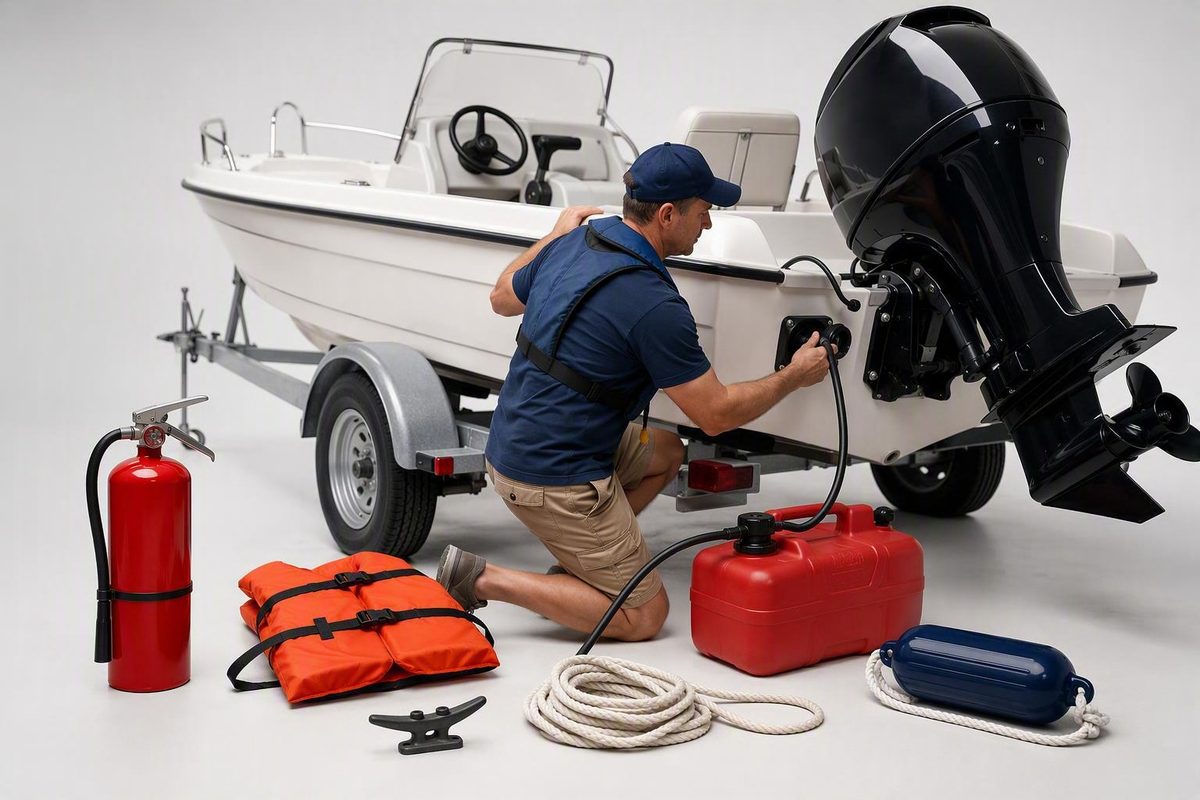
The short answer: complete this checklist before fueling
Before you open the fuel cap, complete this sequence: secure, clear, shut down, extinguish, close, inspect, verify, and prepare.
- Secure the boat. Tie it firmly to the fuel dock with suitable lines so it cannot drift, strike the dock, or pull the fuel hose tight. If practical, position the fuel-fill side near the pump before shutting down.
- Clear the fueling area. Ask passengers to step onto the dock or move safely away from the fill, vent, hose, and nozzle. If limited mobility or unsafe dock conditions make disembarking more hazardous, place the passenger as far from the fueling area as practical and provide appropriate supervision.
- Shut down engines and equipment. Stop the propulsion engine and generator. Switch off fans, appliances, electronics, and other equipment capable of creating heat or a spark, following the vessel manufacturer’s shutdown procedure.
- Extinguish every flame. Put out cigarettes and other smoking materials. Turn off grills, galley burners, pilot lights, and every other open flame. Prohibit smoking around the boat.
- Close the boat. During gasoline fueling, close cabin doors, windows, ports, hatches, and other openings so vapor is less likely to enter enclosed spaces.
- Inspect the fuel system. Check accessible tanks, hoses, fuel lines, clamps, connections, and vents. Stop if you find deterioration, looseness, damage, leakage, or an unexplained gasoline odor.
- Verify before dispensing. Confirm the fuel type or grade required by the engine, then identify the labeled fuel-fill fitting. Never choose an opening merely because it is near the pump or resembles a deck fill.
- Prepare for fire and spills. Put an appropriate fire extinguisher within immediate reach and stage absorbent material around or beneath the fill and vent area.
Securing the vessel, removing passengers when practical, eliminating ignition sources, closing openings, inspecting fuel-system components, removing portable tanks, and keeping an extinguisher accessible are part of the Indiana boating-safety course’s pre-fueling procedure. Fuel and fill verification, along with absorbent-pad preparation, are also included in the CLiX fuel-dock checklist.
Stop rule: Do not begin fueling if you find a leak, smell unexplained fuel, see a damaged fuel-system component, cannot eliminate an ignition source, or remain uncertain about the correct fuel or fill opening. Resolve the problem first.
Ventilating an unexplained odor does not repair a leak. Guessing at a deck fitting can put fuel somewhere it does not belong. When any part of the preparation remains uncertain, keep the cap closed and seek assistance.
Why boat fueling demands more preparation than filling a car
Gasoline vapor is heavier than air. On a boat, it can descend into a bilge, engine compartment, cabin sole, or another low or enclosed space instead of dispersing readily. An engine, electrical device, appliance, pilot light, cigarette, or other source of heat, flame, or spark can ignite accumulated vapor. This low-space accumulation hazard is why gasoline fueling requires careful shutdown, vapor control, and post-fueling ventilation, as explained in Scepter’s marine refueling guidance.
The checklist addresses four practical hazards:
- Vapor ignition: Shutting down machinery and spark-producing equipment, extinguishing flames, and closing cabin openings reduce the chance that gasoline vapor will reach an ignition source or enter an enclosed area.
- Fuel accumulating aboard: Inspecting visible system components and watching the fill and vent can reveal leaks, splash-back, or fuel entering an unintended space.
- Spills: Absorbent material, slow delivery, and continuous control of the nozzle help keep fuel off the deck and out of the water.
- Wrong fuel or wrong opening: Reading pump and deck labels helps prevent fuel from entering an incompatible engine system, water tank, waste fitting, bilge, or other unintended location.
The vapor explanation applies principally to gasoline. Diesel fueling still requires shutdown, ignition control, correct-fuel verification, spill prevention, and adherence to the manufacturer’s procedure, but gasoline and diesel should not be treated as having identical vapor behavior or ventilation requirements.
A boat may concentrate tanks, vents, generators, batteries, wiring, appliances, and enclosed compartments close to the fill point. The purpose of the checklist is to establish a controlled environment before fuel begins moving.
Secure the boat and control the fueling area
Approach the fuel dock slowly, with lines and fenders ready. When practical, position the labeled fuel fill close to the pump before stopping the engine. This limits unnecessary hose routing and helps the operator remain beside the fill.
Tie the boat securely enough that wake, wind, or movement aboard cannot pull it away from the dock, force it against the dock, or put tension on the hose. Select lines appropriate to the boat and conditions rather than relying on a single loose connection. Practical fuel-dock guidance recommends minimizing vessel movement and positioning the fill near the dock when possible before handling the fuel hose.
Once the boat is secure, clear the working area. Passengers should normally step onto the dock or move well away from the fill and vent. Keep children with a responsible adult and away from the pump, hose, nozzle, deck fill, and switches. Anyone who must remain aboard should stay outside the operator’s working area and avoid operating equipment.
Passenger removal is a strong default, not a reason to create a more immediate hazard. A person with limited mobility may be safer in a designated position away from the fill than crossing a narrow, wet, unstable, or poorly guarded dock. Make that decision deliberately and ensure the person is supervised.
Before opening the cap:
- Establish a no-smoking and no-open-flame zone.
- Confirm that grills and cooking equipment are off.
- Keep people from stepping over, moving, or pulling on the hose.
- Keep the operator’s route between the pump and fill clear.
- Place the fire extinguisher where it can be reached promptly.
- Position absorbent pads without obstructing the fuel vent.
- Confirm that passenger movement has not destabilized the boat.
Make sure the actual fuel fill is visible and accessible before selecting the nozzle.
Good lighting makes labels, vents, drips, and splash-back easier to see. Daylight may make the operation easier, but it is not presented here as a universal legal requirement. Follow the facility’s current procedures if fueling in poor light is necessary.
Shut down ignition sources and keep vapor out of the boat
Stop every propulsion engine and generator before dispensing fuel. Verify that the machinery has stopped instead of relying only on a switch position or display.
Next, turn off equipment that could produce heat, a flame, or a spark. Depending on the vessel, that may include fans, cooking equipment, cabin appliances, entertainment electronics, chargers, or other electrical loads. Follow the shutdown sequence in the vessel and equipment manuals because boat layouts and electrical systems differ.
A generic checklist should not automatically override the manufacturer by declaring that every main battery switch must be turned off. The controlling rule is to eliminate credible ignition sources while following boat-specific instructions and fuel-dock procedures.
Physically check flame-producing equipment:
- Extinguish cigarettes, cigars, and other smoking materials.
- Shut down grills and portable cooking appliances.
- Turn off galley burners.
- Extinguish stove, heater, or refrigerator pilot lights where fitted.
- Keep matches, lighters, and spark-producing tools out of use.
- Prevent smoking near the fueling area.
During gasoline fueling, close cabin doors, windows, ports, hatches, and similar openings. The openings remain closed while fuel is being dispensed to reduce vapor entry; they are reopened afterward for ventilation. Safe Boating America’s fueling procedure separates closed openings during dispensing from ventilation before restart.
Bilge blowers and other fans should not normally be running while gasoline is being dispensed. Shut them down with other electrical equipment unless the vessel manufacturer explicitly directs otherwise. Where a blower is installed and applicable, its usual place in the sequence is after fueling and before restart.
Remember the order:
- Before fueling: stop engines, generators, fans, and ignition-capable equipment.
- During gasoline fueling: keep enclosed-space openings closed.
- After fueling: secure the cap, contain drips, reopen the boat, ventilate as directed, and inspect.
- Before restarting: confirm that no unexplained gasoline odor or evidence of leakage remains.
Inspect the system and verify the fuel before dispensing
A pre-fueling inspection does not require dismantling the boat. It does require checking the parts that are accessible and taking any abnormal condition seriously.
Inspect, as applicable:
- The visible tank and its supports
- Fill and supply hoses
- Fuel lines
- Hose ends and clamps
- Connections and fittings
- The deck-fill fitting and cap
- The vent opening and accessible vent line
- Areas beneath or around the fill
- The deck, bilge, and engine space for evidence of leakage
Look for cracks, chafing, corrosion, deterioration, loose clamps, wetness, staining, damaged fittings, unstable components, or fuel where it does not belong. Stop and consult the manufacturer’s troubleshooting instructions or a qualified service provider.
Treat an unexplained gasoline odor as evidence that requires investigation. Do not merely open a hatch, wait for the odor to diminish, and proceed. A boat-dealer safety guide likewise advises inspecting tanks and fuel lines and treating any sign of a leak as requiring attention before further use.
Before selecting a nozzle, consult the boat and engine documentation for:
- Required gasoline or diesel fuel
- Fuel grade or octane requirements
- Fuel-composition restrictions, if applicable
- Tank capacity
- Shutdown procedure
- Ventilation and blower instructions
- Portable-tank handling
- Fuel-system warnings
Then make two separate identifications.
First, verify the fuel. Read the pump label and compare it with the engine requirement. Do not rely on hose color or assume that another crew member selected the correct pump.
Second, verify the fill. Find the fitting labeled for fuel. Boats may have nearby fittings for water, waste, or other systems, and location alone is not reliable. If the label is missing, damaged, or ambiguous, do not dispense fuel until the fitting is positively identified.
Do not plan to top off the tank. Fuel needs room for expansion, and the correct stopping point depends on the tank, installation, temperature, and manufacturer’s instructions. Although some general guidance gives percentage targets, a vessel-specific limit is more reliable than applying one percentage to every boat. America’s Boating Club advises boaters to use the correct fuel and leave room for expansion rather than filling the tank completely.
Finally, place absorbent pads around or beneath the fill and, where practical, near the vent. Do not cover or obstruct the vent. Have extra absorbent material available before dispensing starts.
Built-in tanks, portable tanks, outboards, and trailered boats
The core precautions apply broadly, but the details vary with the tank, propulsion system, and vessel layout.
| Boat or fuel arrangement | Universal precautions | Gasoline-specific emphasis | Vessel-dependent checks |
|---|---|---|---|
| Built-in gasoline tank | Secure the boat, clear the area, stop engines, verify the fuel and fill, inspect for leaks, and prepare spill control | Close enclosed-space openings during dispensing; eliminate flame and spark sources; ventilate and check for vapor afterward | Follow the vessel’s shutdown procedure, tank limit, vent design, and blower instructions |
| Portable outboard tank or fuel can | Verify the fuel, inspect the container and connections, prohibit smoking, and control spills | Keep vapor away from the boat and enclosed spaces | Disconnect and remove the container; fill it on the dock or solid ground under its instructions |
| Open outboard boat | Secure, shut down, inspect, verify, prevent spills, and control ignition sources | Remain alert for gasoline odor and spilled fuel even without a cabin | Do not impose an inboard blower procedure if no applicable powered ventilation is installed |
| Trailered boat | Stabilize the rig, identify the fill, shut down ignition sources, and prepare absorbents | Keep gasoline out of the bilge and enclosed areas | Level or position the trailer as directed by the manufacturers |
| Diesel-powered boat | Secure, stop machinery, verify diesel, control ignition sources, and prevent spills | Do not transfer gasoline-specific vapor instructions unchanged | Follow the diesel-engine, tank, ventilation, and facility procedures |
| Personal watercraft | Shut down, identify the fuel fill, inspect for leakage, and prevent spills | Control gasoline ignition and vapor hazards | Follow the manufacturer’s exact fueling position, fill limit, ventilation, and restart procedure |
Built-in gasoline tanks
For a built-in gasoline tank, close cabin and enclosed-space openings before dispensing. Shut down engines, generators, fans, appliances, and other ignition-capable equipment according to the vessel manual. After fueling, reopen the boat and complete the prescribed ventilation and inspection procedure before restarting.
Watch the fill and vent while fueling. Splash-back, fuel at the vent, or an abrupt change in filling behavior is a reason to stop rather than force more fuel into the tank.
Portable tanks and fuel cans
Disconnect and remove a portable outboard tank or fuel can from the boat. Fill it on the dock or solid ground rather than aboard the boat or in a vehicle bed. This removal procedure is included in regional guidance covering both portable tanks and built-in systems at the fuel pump.
Use a container approved or compliant for the relevant fuel and application under its instructions, facility rules, and current local requirements. Because container and transport requirements can vary, do not assume that any one product or description is acceptable in every location or context.
Verify what fuel it contains before adding more.
Open outboard boats
An open boat without an enclosed engine compartment may not have an inboard boat’s blower procedure, but the universal precautions remain: secure the boat, move people away from the fill, shut down the outboard, extinguish flames, inspect the tank and line, verify the fuel, attend the nozzle, and prevent spills.
Do not create an equipment requirement that the vessel was not designed to meet. Follow the outboard and boat manufacturers’ inspection, ventilation, and restart instructions.
Trailered boats
Secure the tow vehicle, stabilize the trailer, and level or position it as specified for fueling. Make sure the boat cannot shift and that the labeled fill is visible and accessible. If hull angle affects tank filling or venting, use the manufacturer’s required position.
Uncertainty about the fill, fuel, tank condition, or correct fueling angle activates the same stop rule that applies at a marina: do not dispense until the uncertainty is resolved.
Diesel boats and personal watercraft
For a diesel-powered boat, retain the universal controls but use the diesel-specific procedure in the manuals. Do not assume gasoline blower timing, vapor behavior, or cabin-opening guidance transfers unchanged.
For a personal watercraft, follow the manufacturer’s directions for position, fill level, ventilation, and restart. Do not tilt or reposition it merely to force more fuel into the tank.
While fueling: prevent static, overfilling, and spills
This is the during-fueling stage. Begin only after the preparation checklist is complete.
Remove the cap from the confirmed fuel-fill fitting and place it where it will remain clean and secure. Insert the correct nozzle into the fill and maintain manual control throughout fueling.
Where appropriate for the nozzle and fitting, keep the nozzle in contact with the fill while dispensing to reduce static-spark risk. Do not wedge the handle open, walk away, or rely entirely on automatic shutoff.
Fuel slowly enough to notice:
- A change in sound at the fill or vent
- Splash-back from the fill
- Fuel appearing near the vent
- An unexpected gasoline odor away from the fill
- Leakage beneath the deck or around a connection
- Delivery exceeding the amount you expected
- Boat movement that begins to tension the hose
Do not top off. Stop at the limit prescribed by the tank or vessel manufacturer and leave the required expansion space. Maintain control of the nozzle, keep appropriate nozzle-to-fill contact, use absorbent material, and avoid forcing additional fuel into a nearly full tank, as summarized in the CLiX during-fueling guidance.
Keep absorbent material positioned to catch drips around the fill.
If a spill or leak occurs:
- Stop dispensing immediately.
- Keep engines and unnecessary electrical equipment off.
- Warn people away from the affected area.
- Notify fuel-dock staff.
- Follow the facility’s spill-response procedure.
- Follow any current local instructions that the facility or relevant authority provides.
Do not restart the boat merely to move it away while gasoline odor or evidence of leakage remains.
After fueling: ventilate, inspect, and restart safely
Do not move directly from replacing the nozzle to starting the engine. Complete this sequence first:
Cap, clean, open, ventilate, inspect, smell-check, start, reboard.
Cap
Replace and secure the fuel cap.
Clean
Use the prepared absorbent material to contain fuel left around the fill or on the deck. Check the vent area as well as the fill. Handle used absorbent material according to the facility’s procedure.
Open
Reopen the doors, windows, ports, and hatches that were closed during gasoline fueling. This begins the post-fueling ventilation stage.
Ventilate
Where an applicable bilge blower or powered ventilation system is installed, operate it after fueling and before restart for the period and in the manner specified by the vessel manufacturer. Several boating-safety guides cite at least four minutes for applicable gasoline-powered inboard installations, including America’s Boating Club’s post-fueling guidance.
Four minutes is not a universal instruction for every boat. Do not impose it unchanged on an open outboard, diesel boat, vessel without powered ventilation, or design with different manufacturer requirements. Follow the vessel’s labels and manual.
Inspect
Check the deck, fill, vent, visible tank and fuel-system areas, bilge, and engine compartment as applicable. Look for liquid fuel, wetness, staining, a displaced cap, a loose connection, or another change that occurred during fueling.
Do not limit the inspection to the deck fill. Fuel from a damaged hose, wrong opening, or failed connection may appear elsewhere.
Smell-check
If odor remains, do not start the engine or operate unnecessary electrical equipment. Continue appropriate ventilation and locate the source.
A persistent odor is not simply a reason to run the blower longer. It may indicate a spill or leak that must be identified and corrected. If you cannot find and resolve the cause, obtain qualified assistance.
Start
Start the engine only after the cap is secure, drips are contained, openings have been reopened, the applicable ventilation procedure is complete, and no gasoline odor or evidence of leakage remains. Continue watching for abnormal odor or leakage during startup.
Reboard
Allow passengers to reboard after the ventilation, inspection, and safe-start sequence is complete. Supervise children and anyone who needs assistance, and keep passengers clear of fueling equipment and used spill-control materials.
Frequently asked questions
What is the first thing you should do before fueling a boat?
Secure the boat firmly to the fuel dock with suitable lines. It must not drift away, strike the dock, or pull the hose tight while the operator handles the nozzle.
Once the boat is secure, clear the fueling area and complete the remaining sequence: shut down, extinguish, close, inspect, verify, and prepare. Do not open the cap until the area is controlled.
Do all passengers have to leave the boat while it is being fueled?
Passengers should normally disembark or move safely clear of the fueling area. This keeps nonessential people away from the fill, vent, hose, nozzle, and ignition controls.
Disembarkation should not create a more immediate hazard. If limited mobility or unsafe dock conditions make leaving the boat less safe, place the passenger as far from the fueling area as practical under responsible supervision.
Why should hatches, windows, and doors be closed during fueling?
On a gasoline-powered boat, closing doors, windows, ports, and hatches while fuel is dispensed helps keep gasoline vapor from entering cabins and other enclosed spaces.
Reopen those areas after fueling. Then ventilate and inspect the vessel as directed before restarting.
Should you run the bilge blower before or after fueling, and for how long?
Do not normally run the bilge blower while gasoline is being dispensed. Shut it down with other electrical equipment unless the vessel manufacturer explicitly directs otherwise.
After fueling, reopen the boat and operate an applicable blower before restart according to the vessel’s instructions. Several recreational-boating guides specify at least four minutes for gasoline-powered inboard boats with relevant powered ventilation, but applicability and duration depend on the vessel’s design. The distinction between enclosed inboard arrangements and open outboards is reflected in recreational boat fuel-management guidance.
A timed blower cycle does not replace inspection. If gasoline odor or evidence of a leak remains, do not start the engine.
What should you do if you smell gasoline before starting the engine?
Do not start the engine, operate unnecessary electrical equipment, or introduce a flame or spark. Keep people away, continue appropriate ventilation, and inspect the fill, vent, deck, bilge, engine compartment, tank, hoses, lines, clamps, and connections as applicable.
Find and correct the source rather than waiting for the odor to fade. If you cannot positively identify and resolve it, obtain qualified assistance.
Before every fueling stop, remember: secure, clear, shut down, extinguish, close, inspect, verify, and prepare. Do not fuel—or restart—while a leak, damaged component, unexplained fuel odor, active ignition source, or uncertainty remains. When the vessel manual, engine requirements, fuel-dock rules, or applicable local instructions are more specific than this general checklist, follow them.