
Is a Composite Touring Kayak Worth the Extra Cost?
Fiberglass suits ordinary touring and carefully managed launches, but repeated collisions, uncontrolled drops and concentrated rock impacts are not ideal.
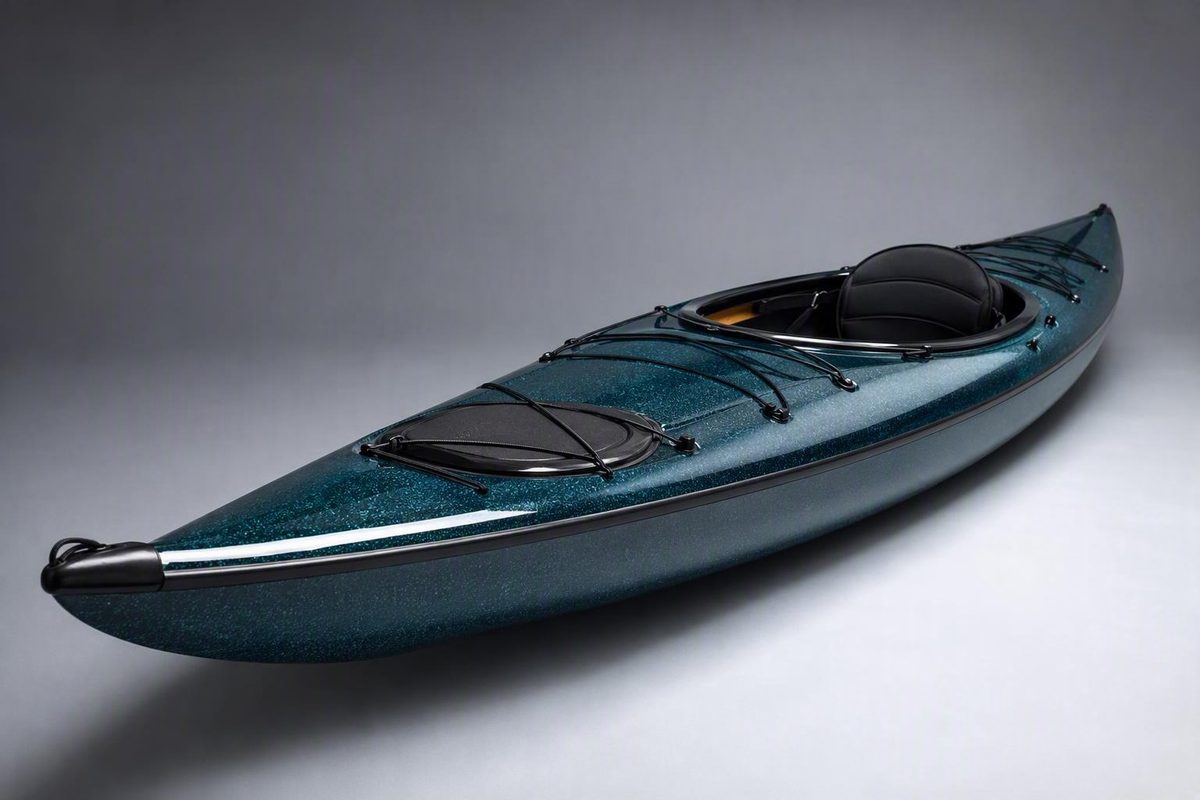
A fiberglass kayak can justify its premium, but not simply because “fiberglass is better.” Its most practical advantages are often lower carrying weight than a broadly comparable polyethylene touring kayak, a stiff hull, access to refined touring designs, and a laminate that can often be rebuilt after damage. The tradeoffs are a higher purchase price and less tolerance for severe, concentrated impacts or repeated rough contact with rocks.
The right choice depends on the actual boat: hull design, fit, layup, weight, outfitting, condition, intended water, transport routine, and delivered cost. A well-fitting polyethylene kayak is a better purchase than an ill-fitting composite one. Likewise, a carefully inspected used fiberglass kayak may offer better value than a new boat whose cockpit, weight, or handling does not solve the buyer’s real needs.
Updated August 15, 2026. This guide distinguishes manufacturer specifications and construction descriptions from retailer asking prices, specialist editorial guidance, and owner anecdotes. Dynamic inventory and prices are dated snapshots rather than appraisals.
What a fiberglass kayak is—and what “composite” does not tell you
A fiberglass kayak is made from glass-fiber reinforcement bonded with resin. In a common production method, the deck and hull are formed separately in molds, often over an exterior gelcoat layer, and then joined at the seam. The finished shell may also incorporate bulkheads, local reinforcement, and foam or honeycomb cores. That general description does not establish the exact materials or laminate schedule used in any particular kayak.
Each component has a different role:
- Hull-to-deck seams connect the separately molded sections.
Not every fiberglass kayak uses all these elements in the same way. Some have solid fiberglass laminates; others combine fiberglass with aramid, carbon, or a core.
Seaward offers one manufacturer-specific example. It describes hand-laid composite materials and resin, interior and exterior fiberglass seams, reinforced decks and hulls, and bulkheads fiberglassed into place. That is Seaward’s construction approach, not a universal recipe for all composite kayaks. See Seaward’s construction description.
“Composite” is a category, not a material specification
In kayak listings, composite can refer to fiberglass, aramid—often marketed under the Kevlar name—carbon fiber, blended fabrics, or laminates incorporating an optional core. Fiberglass is therefore one type of composite construction, but not every composite kayak is fiberglass.
These labels are not interchangeable:
- Fiberglass
- Aramid or Kevlar
- Carbon fiber
- Carbon-aramid blends
- Fiberglass-aramid hybrids
- Cored composite laminates
- Thermoformed sheet materials
- Carbonlite
- A-Core
- Other proprietary construction names
Thermoformed kayaks are generally shaped from plastic sheet rather than built from resin-bonded reinforcement fabrics. Proprietary names may refer to a plastic, composite, core, or blended system—or reveal very little unless the manufacturer supplies a technical specification.
When a listing says only “composite,” ask:
- Which reinforcement fibers are used?
- What resin system is used?
- Is the hull solid laminate or cored?
- Are the hull and deck made with the same layup?
- Is the exterior gelcoat, paint, or another finish?
- Did the construction change between model years?
- What repair products and procedures does the manufacturer approve?
The answers may explain why two similarly sized composite kayaks differ in weight and price. They also affect repair decisions: a method suitable for a gelcoated fiberglass laminate should not automatically be transferred to aramid, carbon, thermoformed plastic, or an unidentified proprietary hull.
The practical case for and against fiberglass
The strongest everyday argument for fiberglass is often what happens before and after paddling. A modest reduction in weight can matter every time a kayak moves from storage to a roof rack, from the vehicle to the launch, or across a portage. For many owners, easier transport is a more concrete benefit than an unverified promise of extra speed.
Fiberglass also creates a stiff shell and can support refined molded shapes. That makes it a natural candidate for sea kayaks, day-touring boats, expedition designs, and other craft where fit, storage, directional control, and predictable hull form matter.
Repairability is another advantage. Surface-finish damage can often be restored, while cracked or punctured reinforcement can sometimes be removed and rebuilt. This does not mean every repair is easy, inexpensive, permanent, or suitable for a beginner. It means structural damage to a fiberglass shell is not necessarily the end of the kayak.
The tradeoff is impact tolerance. Polyethylene can flex or deform under contact that may crack a stiffer composite laminate. Fiberglass is compatible with ordinary touring use and carefully managed launches, but repeated collisions, uncontrolled drops, and concentrated impacts against rocks are not its ideal conditions. A manufacturer comparison similarly positions composite construction as light and stiff but more expensive and less suited to rugged impacts than polyethylene. Review DesignKayaks’ material comparison.
This creates an important distinction:
- Damage resistance asks how likely the hull is to be damaged during contact.
- Repairability asks what can be done after damage occurs.
Polyethylene may be the more forgiving option around rocks, even if a badly punctured or deformed plastic hull presents difficult repair questions. Fiberglass may crack sooner under a concentrated impact, yet damaged reinforcement can often be reconstructed by a capable composite repairer.
When fiberglass makes practical sense
A fiberglass kayak belongs on the shortlist when:
- Open-water touring is the main use.
- The kayak will be car-topped frequently.
- Long carries or portages make weight consequential.
- The owner values a stiff touring hull.
- Storage and handling can be controlled.
- The boat will usually be carried to the water rather than dragged.
- The buyer accepts a higher initial price for the right fit and design.
- Suitable composite-repair help is available if serious damage occurs.
Polyethylene is generally the safer material choice when:
- Whitewater is the primary use.
- Shallow, rocky rivers are routine.
- The kayak will regularly be dragged over beaches or ramps.
- It will frequently be lent to inexperienced paddlers.
- Drops, collisions, and rough storage are likely.
- Rugged handling matters more than carrying weight.
- A lower purchase price is a firm priority.
Use-case decision matrix
| Use case | Fiberglass fit | Polyethylene fit | What should decide it |
|---|---|---|---|
| Open-water touring | Strong candidate | Also viable | Fit, hull design, transport weight, and budget |
| Long carries and portages | Often advantageous | May become burdensome | Actual boat weight and carrying method |
| Rocky launches | Acceptable with controlled handling | More forgiving | Frequency and severity of contact |
| Surf landings | Viable with skilled, controlled handling | More tolerant of rough landings | Beach composition, skill, and impact consequences |
| Whitewater | Usually a poor default choice | Generally preferred | Repeated rock contact and rough handling |
| Family lending | Requires clear handling rules | Usually more forgiving | Borrower experience and replacement cost |
| Expedition travel | Strong when weight, fit, and storage work | Strong when ruggedness dominates | Route, landings, remoteness, load, and repair plan |
Material should never be considered in isolation. A durable polyethylene kayak with inadequate flotation compartments, poor fit, or insufficient storage is not automatically expedition-ready. Nor is every fiberglass boat suitable for open water simply because it is composite.
Fiberglass versus plastic, aramid, carbon, and hybrid layups
Fiberglass occupies the middle of the composite market. It is commonly positioned as lighter and stiffer than rotomolded polyethylene, but heavier and less expensive than premium aramid or carbon constructions. These are broad tendencies, not guaranteed rankings. A heavily reinforced fiberglass expedition hull may outweigh a smaller plastic day boat, and outfitting can erase an expected material advantage.
Paddling Magazine describes composite construction as including fiberglass, aramid, carbon, blended fabrics, and optional cores. It also characterizes fiberglass as generally heavier and less expensive than aramid and carbon. Its material guide explains these construction categories.
| Material | Carrying weight | Stiffness | Impact behavior | Rough-handling tolerance | Purchase price | Repair considerations |
|---|---|---|---|---|---|---|
| Fiberglass | Often moderate for a touring kayak | High relative to conventional polyethylene | Can crack or puncture under concentrated impact | Best with deliberate handling | Commonly above basic polyethylene and below premium carbon | Finish and laminate can often be rebuilt with compatible materials |
| Rotomolded polyethylene | Often heavier in comparable touring designs | More flexible | Can flex or deform under impact | Generally well suited to rocks, lending, and rough handling | Commonly lower | Repair methods are plastic-specific, and some damage is difficult to restore cleanly |
| Aramid or Kevlar | Often lighter than fiberglass, depending on layup | Product-specific but generally stiff | Exact behavior depends on the laminate | Not automatically suitable for repeated rock contact | Commonly above fiberglass | Fiber behavior and finishing differ from ordinary fiberglass |
| Carbon fiber | Can be used in low-weight constructions | Potentially very stiff | Product- and layup-specific | Cannot be inferred from the fiber name alone | Commonly premium-priced | Repairs should preserve the intended laminate and load path |
| Hybrid composite | Varies widely | Varies widely | Depends on fiber mix, core, resin, and reinforcement | Cannot be inferred from “hybrid” alone | Varies | Each material and the compatible repair system must be identified |
| Thermoformed material | Product-specific | Product-specific | Product-specific | Must be evaluated by exact construction | Varies | It is not a fiberglass laminate and should not be repaired as one |
Why listing-level verification matters
Retail categories are not technical certifications. A collection titled “fiberglass kayaks” may contain aramid, Kevlar, A-Core, used boats, final-sale stock, and listings that do not clearly disclose construction. That may reflect broad merchandising rather than a claim that every item uses the same laminate.
Do not choose a boat solely because a listing says “carbon,” “Kevlar,” or “composite.” Compare:
- Exact model and model year
- Confirmed construction
- Length and width
- Listed and, if possible, verified weight
- Cockpit dimensions
- Seat, foot braces, and deck height
- Hatch and bulkhead arrangement
- Rudder or skeg equipment
- Condition and repair history
- Intended water and load
- Delivered price
A material label is useful for narrowing the search. It is not a substitute for evaluating the complete kayak.
Weight, stiffness, and speed: what the evidence actually supports
Fiberglass touring kayaks are often lighter than broadly comparable polyethylene models, but there is no universal weight saving. “Comparable” must account for more than length. Width, depth, load capacity, hatch layout, seat system, steering equipment, reinforcements, cores, and laminate schedule can all affect the result.
A 2020 owner discussion provides examples rather than controlled evidence. One contributor described a plastic boat as approximately 7–8 pounds heavier than a composite alternative. Another reported moving from a 63-pound plastic kayak to a 49-pound Carbonlite boat and finding transport easier. The contributors’ credentials and the comparability of the boats were not verified, and Carbonlite should not be treated as conventional fiberglass. Read the owner discussion and model-specific anecdotes.
These accounts do not show that every fiberglass kayak saves 7–14 pounds. They do illustrate why a difference that looks modest on a specification sheet may become meaningful during roof loading, carrying, and portaging.
Why the material label cannot predict weight
Two kayaks assigned to the same broad material category can differ because of:
- Hull length and beam
- Deck height and internal volume
- Single or tandem configuration
- Solid or cored laminate
- Reinforced keel and impact zones
- Heavy-duty expedition layups
- Number and size of hatches
- Rudder or skeg equipment
- Seat and outfitting systems
- Repairs and modifications
- Manufacturing changes between model years
Variation within one composite catalog can be substantial. In the Seaward catalog snapshot reviewed for this guide on August 15, 2026, visible single and tandem models span approximately 13.5 to 19 feet and manufacturer-listed weights range from 52 to 80 pounds. Where the captured specifications are clear, listed storage totals range from 158 to 264 liters. These figures illustrate differences among boat sizes and configurations, not merely differences among fibers. See the captured manufacturer specifications.
Does stiffness make a fiberglass kayak faster?
A stiff shell changes shape less under load than a flexible one. In principle, that may affect acceleration, responsiveness, or how directly paddle input is transmitted. The supplied evidence, however, contains no standardized side-by-side test that quantifies a speed or efficiency advantage attributable specifically to fiberglass.
Hull design, waterline length, wetted area, load, trim, wind, waves, paddling technique, and paddler fitness can dominate a modest material effect. A faster hull molded in polyethylene may outperform a slower hull molded in fiberglass. Even apparently similar models may differ enough in shape or fit to affect the result.
Owner opinions also vary. Some contributors in the cited discussion valued composite stiffness, while others reported little handling difference. The responsible conclusion is limited: stiffness may be noticeable and valuable to some paddlers, but fiberglass does not guarantee a dramatic—or even perceptible—speed increase. Testing the exact model is more informative than relying on the material label.
Perform the lifting test before the speed test
Before buying, reproduce the movements required in real ownership:
- Assess the lift from the kayak’s likely storage height.
- Carry it far enough to judge grip, balance, and fatigue.
- Evaluate the movement needed to reach the vehicle rack.
- Account for wind, wet hands, uneven ground, and end-of-day fatigue.
- Decide whether you need a loading aid, cart, trailer, or second person.
- Consider the additional gear that must be moved on every trip.
Do not try to prove that you can lift a seller’s boat by attempting a movement outside your abilities. The relevant question is not whether fiberglass is theoretically lighter. It is whether you can safely manage this particular kayak throughout your normal transport routine.
Choose the hull and fit before choosing the material
Material cannot correct a cockpit that traps your legs, a deck that prevents useful thigh contact, or a hull designed for different water. Start with intended use and fit; use construction as a later filter.
Match the hull to the trip
Day paddling: Prioritize comfortable fit, manageable transport weight, easy launching, and enough storage for clothing, food, water, and safety equipment.
Touring: Look for efficient cruising characteristics, secure contact, dependable hatches, suitable directional control, and adequate volume for the intended trip.
Performance paddling: Fit, hull behavior, and skill demands matter more than the material category. A narrow or low-volume composite kayak is not automatically appropriate for every buyer.
Expedition use: Assess gear capacity, loaded handling, sealed compartments, hatch access, landing conditions, repair options, and the consequences of damage in remote areas.
Tandem travel: Include the combined paddler and gear load, cockpit spacing, steering system, communication needs, and the greater difficulty of carrying and storing a long tandem.
Mixed use: Identify the most demanding regular use, not a hypothetical once-a-decade trip. The boat should handle that use without becoming unnecessarily burdensome on ordinary outings.
Evaluate body contact and safe entry
Sit in the kayak with the foot braces adjusted correctly. Check:
- Whether your feet reach the braces without locking your knees
- Whether your thighs contact the intended supports
- Whether the deck accommodates your legs and normal footwear
- Whether the seat width and back support are comfortable
- Whether you can rotate your torso for an effective stroke
- Whether the cockpit permits controlled entry and exit
- Whether you can release your legs promptly when leaving the boat
“Low volume,” “standard volume,” and “high volume” are not universal paddler-weight standards. One manufacturer’s high-volume model may differ from another’s in deck height, beam, legroom, capacity, or overall fullness. Verify the manufacturer’s fit and load guidance for the exact model.
Seaward’s catalog illustrates the variety available within one product line: it includes singles, tandems, high-volume versions, and larger-cockpit variants. These labels describe model configurations, not universal paddler-size categories.
Storage should likewise be treated as a trip-planning factor rather than a contest for the largest number. Gear must fit through the hatch openings, remain organized, and allow the kayak to be loaded within the manufacturer’s guidance. The most useful storage arrangement is the one that suits the intended trip and preserves workable trim.
Rudder, skeg, or neither?
A rudder and a skeg are configuration choices, not measures of laminate quality.
- A kayak with neither relies on hull design and paddler input.
Inspect and test whichever system is fitted. In Olympic Outdoor Center’s retailer snapshot reviewed on August 15, 2026, its five used kayaks categorized as fiberglass included four listed with rudders and one with a skeg. See the retailer’s configuration fields.
Fit-first shortlist template
Use the same fields for every candidate:
| Field | Candidate details |
|---|---|
| Make, model, and year | |
| Exact fiber, resin, and core construction | |
| Length and width | |
| Listed weight | |
| Verified actual weight, if available | |
| Cockpit length and width | |
| Deck height and thigh contact | |
| Manufacturer capacity or fit guidance | |
| Storage volume and hatch arrangement | |
| Bulkhead configuration | |
| Rudder, skeg, or neither | |
| Intended use | |
| Normal paddler and gear load | |
| Storage method | |
| Vehicle-loading method | |
| Can the buyer carry and load it safely? | |
| Test-paddle observations |
A shortlist built this way prevents an attractive material label from overriding poor fit or unsuitable design.
What fiberglass kayaks cost—and how to interpret asking prices
There is no dependable universal price range for a fiberglass kayak. Listings change, construction labels are inconsistent, and final cost depends on location, condition, delivery, accessories, warranty status, and immediate repair needs.
Treat every advertised price as a dated asking-price snapshot, not an appraisal or proof of fair market value.
In the Olympic Outdoor Center snapshot reviewed on August 15, 2026, five used kayaks under the retailer’s fiberglass filter had asking prices from $500 to $1,675, and all five were marked “Very low stock.” The listings covered day, touring, performance, and expedition categories. These were one retailer’s asking prices for a small, changing inventory—not verified sale prices or a market range. View the dated retailer snapshot.
New retail asking prices can exceed $3,000. In the BestCoast Outfitters collection reviewed on August 15, 2026, clearly labeled fiberglass examples were displayed at $3,308 and $3,675 USD. The wider collection also contained aramid, Kevlar, A-Core, used, and final-sale inventory, so it should not be treated as a clean fiberglass-only sample. See the retailer’s labels and displayed prices.
Marketplace listings show similarly wide variation. On the eBay category page reviewed on August 15, 2026, one seller asked $4,499.95 plus $375 shipping for a new kayak described by the seller as 100% fiberglass. Another asked $1,100 with local pickup for a used fiberglass kayak. These were seller-supplied descriptions and asking prices, not verified transactions, condition assessments, or fair-value estimates. View the marketplace page.
Calculate total acquisition cost
The listing price is only the starting point. Add:
- Freight charges or fuel for pickup
- Ferry, toll, or overnight travel costs
- Sales tax
- Roof rack, cradles, straps, or trailer
- Loading aids or a kayak cart
- Paddle, spray skirt, pump, and missing equipment
- Replacement hatch covers or deck lines
- Rudder or skeg service
- Immediate gelcoat or laminate work
- Professional inspection where warranted
- Return limitations
- Uncertainty about used or final-sale warranty coverage
A lower-priced kayak can become the expensive option if it needs structural work, replacement hardware, and long-distance collection. Conversely, a sound used composite boat that fits well may reduce the premium substantially.
Price-comparison worksheet
| Cost or risk field | Boat A | Boat B |
|---|---|---|
| Exact construction confirmed | ||
| Model year and condition | ||
| Asking price | ||
| Shipping, freight, or pickup | ||
| Tax | ||
| Rack or trailer changes | ||
| Included paddle and accessories | ||
| Missing outfitting | ||
| Known repairs | ||
| Estimated immediate work | ||
| Return policy | ||
| Warranty status and transferability | ||
| Total estimated acquisition cost | ||
| Fit and test-paddle result |
Price should be adjusted for condition, not merely age. A clean older kayak with documented, competent repairs may be more attractive than a newer shell with concealed impact damage or neglected fittings.
How to inspect a used fiberglass kayak
Begin by confirming what the boat actually is. Record the manufacturer, model, serial or hull-identification information, approximate year, dimensions, advertised weight, and exact construction. Ask whether the manufacturer still supplies hatch covers, seats, foot-brace parts, rudder components, skeg cables, and other model-specific hardware.
If the seller cannot identify the layup, do not infer it from appearance. A gelcoated or painted surface may conceal fiberglass, aramid, carbon, a hybrid laminate, or earlier repair materials.
Inspect the finish in strong, angled light
Ask to examine a clean, dry kayak in good light. Look across the surface rather than only directly at it.
Note:
- Ordinary scratches
- Localized gelcoat chips
- Spider cracking
- Fine white stress or impact lines
- Exposed reinforcement
- Deep gouges
- Depressions or deformation
- Abrupt changes in color or gloss
- Sanding marks
- Mismatched gelcoat or paint
- Large decals or keel strips that may conceal work
Not every scratch is structural. Gelcoat is an exterior finish, and normal use leaves marks. Concern rises when cracking continues beyond the visible chip, reinforcement is exposed, the panel feels soft, the shape has changed, or water enters a compartment.
Do not aggressively press or flex a seller’s kayak. With permission, use only light, consistent pressure and compare the suspect area with the surrounding shell. A distinctly soft region, crunching sensation, or movement around a patch warrants assessment by someone experienced with thin composite craft.
Follow likely load and impact paths
Inspect these areas carefully:
- Bow and stern
- Keel line
- Hull beneath the seat
- Hull-to-deck seam
- Cockpit rim and coaming
- Hatch rims
- Rudder mounts or skeg box
- Carry-handle attachment points
- Roof-rack contact zones
- Areas around deck fittings
- Hull beneath the foot braces
- Common launch and beach-contact points
Examine both sides of a suspect area where access permits. Exterior finish damage can look small even when the interior reinforcement shows cracking or separation.
Check compartments and outfitting
Inspect:
- Visible bulkhead bonding and seals
- Hatch rims, covers, and retaining straps
- Perimeter lines and bungees
- Deck fittings
- Seat attachments
- Back support
- Thigh braces
- Foot braces and tracks
- Rudder pedals, cables, blade, and mounting hardware
- Skeg control, cable, box, and blade
- Drain plugs, if fitted
Operate the rudder or skeg through its normal range. Check for binding, corrosion, damaged cables, loose fittings, and unreliable deployment or retraction.
Ask about leaks, hard impacts, surf landings, groundings, repairs, storage conditions, saltwater use, and products applied to the hull. Request photographs or invoices for major work. An honest repair history is more useful than an implausible claim that a well-used touring boat has never struck anything.
Evaluate previous repairs
A sound repair should restore structure rather than merely cover damage. Look for:
- Smooth transitions into the original laminate
- Secure bonding around patch edges
- Reinforcement extending across the damaged area
- No soft or lifting perimeter
- No active cracking through the patch
- No bulge that materially changes the hull shape
- Interior reinforcement where appropriate and accessible
A cosmetically rough patch is not automatically unsafe, and a glossy patch is not automatically sound. If the original damage, materials, or workmanship cannot be established, obtain an assessment from someone experienced with thin composite kayaks or canoes.
If the seller agrees to a leakage check, use only a method approved for the particular boat or recommended by a qualified repairer. Because structural repair affects safety, uncertain damage should be evaluated before the kayak is used in demanding or remote conditions. Brian Nystrom’s repair guide likewise recommends professional help when the owner is unsure.
Used-kayak decision sheet
Acceptable cosmetic wear
- Light scratches
- Small, isolated finish chips with hard laminate beneath
- Faded but intact finish
- Superficial scuffs at normal carry or rack points
- Minor cosmetic repairs without softness or continuing cracks
Negotiate and repair
- Worn deck lines or bungees
- Aging hatch covers
- Stiff foot braces
- Rudder or skeg service needs
- Localized gelcoat loss
- Small leaks with an identified, accessible source
- A documented repair that appears sound but affects the price you are willing to pay
Walk away or obtain specialist assessment
- Exposed or broken reinforcement
- Soft, detached, or deformed panels
- Punctures
- Delamination
- Long cracks extending beyond the finish
- White impact lines accompanied by softness or leakage
- An open or deteriorated hull-to-deck seam
- Extensive work that appears intended to conceal damage
- Unexplained water entry
- A large repair with loose edges or uncertain bonding
- Seller refusal to permit a reasonable inspection
No checklist can guarantee that concealed structure is sound. Where the consequences of failure are high, uncertainty itself should affect the purchase decision.
Care, damage triage, and repair boundaries
Routine fiberglass-kayak care is conservative and straightforward:
- Rinse the boat after exposure to saltwater, algae, or mud.
- Wash it when needed with mild soap, water, and a nonabrasive sponge.
- Clean hatch rims, tracks, controls, and hardware.
- Let the shell and compartments dry fully.
- Store the kayak in a cool, shaded location on suitable supports.
- Follow the manufacturer’s instructions for support points and long-term storage.
- Carry the boat or use a suitable cart instead of dragging it where practical.
Inspect the kayak periodically and before demanding trips. Include impact areas, seams, visible bulkhead seals, hatch covers, deck rigging, hardware, seat attachments, foot braces, steering systems, paddle, and safety equipment. General maintenance guidance also identifies fine white lines near an impact as a possible sign of fractured resin. See Angle Oar’s maintenance and inspection guidance.
Triage damage before improving appearance
Often cosmetic, subject to inspection:
- Light scratches
- Dullness
- Small, localized gelcoat chips
- Surface scuffs with hard, intact laminate beneath
Requires closer assessment:
- Fine white impact lines
- Spider cracks concentrated around an impact
- Exposed reinforcement
- A crack continuing through the finish
- Softness or movement
- A changed hull shape
- Water entering a compartment
- Delamination
- A puncture or missing laminate
Polishing may improve a dull or lightly scratched finish. Localized gelcoat work may restore a chipped area when the underlying laminate is sound. Neither process proves that the structure is safe, and appearance should not be improved before deciding whether the reinforcement requires assessment.
What structural repair generally involves
A structural fiberglass repair may require removal of damaged reinforcement, feathering of the surrounding laminate, backing from the inside where accessible, rebuilding to the required thickness with appropriately oriented reinforcement, and restoration of the exterior finish.
That description is intentionally general. The correct fiber, resin, preparation, overlap, cure conditions, and finish depend on the original construction and the location and extent of damage. A worked repair example should not be treated as a universal laminate schedule.
Structural repair is a safety issue. Seek a qualified repairer experienced with thin kayak or canoe laminates when damage is extensive, inaccessible, close to a critical fitting, poorly understood, or beyond your skill. Repair techniques and tools used on much thicker powerboat hulls may be inappropriate for thin kayak shells.
Before choosing resin, reinforcement, gelcoat, solvent, or surface preparation, identify the original construction and consult the kayak manufacturer or a composite specialist. Do not assume that one resin bonds equally well to every laminate, that every solvent is compatible with every foam or finish, or that gelcoat will adhere over any previous repair without product-specific preparation.
Protect yourself during repair work
Resins, hardeners, catalysts, solvents, and fiberglass sanding dust require controlled handling. Follow every product’s instructions and safety data. Use suitable gloves and eye protection, control sanding dust, and provide adequate ventilation. Use an appropriate respirator when required by the product instructions and working conditions; the cited structural-repair guidance specifically recommends respiratory protection, particularly for indoor resin work. Review the repair tutorial’s safety cautions.
Do not improvise a repair process when the existing material, compatible products, or safe working controls cannot be identified. Refer the job to a qualified repairer instead.
Wax and UV protectant: follow model-specific guidance
Advice about waxing fiberglass hulls is inconsistent. Some owners use compatible wax or polishing products for appearance. Others avoid wax because a slippery hull may be harder to grip during assisted rescues and residue may complicate later bonding or refinishing. Silicone-containing products create an additional contamination concern.
Community advice is more consistent about keeping the kayak clean, dry, supported, and out of prolonged direct sun than it is about treating the hull with wax or protectant. Some contributors reserve suitable protectants for rubber or vinyl hatch covers rather than applying them to fiberglass. These are owner opinions rather than controlled product tests. See the differing maintenance views in the WestCoastPaddler discussion.
Follow the kayak manufacturer’s current instructions for the particular finish. Treat hatch-cover care separately: a product approved for rubber or vinyl is not automatically suitable for the hull. Before cosmetic or structural work, tell the repairer which waxes, polishes, or protectants have been applied.
Frequently asked questions
Is a fiberglass kayak worth the extra money?
It can be, especially when lower carrying weight makes roof loading and portaging more practical and the kayak’s fit and touring design suit your normal paddling. Stiffness and repairable laminate may add value, but a dramatic speed increase should not be assumed.
It is less likely to justify the premium if you regularly paddle shallow rocky water, lend the boat, drag it on beaches, or store and handle it roughly. Compare the exact kayak with suitable polyethylene alternatives and include delivery, transport equipment, and immediate repairs in the cost.
Can a fiberglass kayak handle rocky launches and occasional impacts?
Yes, with controlled handling. Carry the kayak into adequate water where practical, avoid placing a loaded hull on sharp points, and do not drag it over rocks.
Repeated or concentrated impact is the greater concern. Polyethylene is generally more forgiving where frequent rock contact is unavoidable. After a hard strike, inspect fiberglass for white impact lines, cracks, exposed reinforcement, softness, deformation, and leaks before returning to demanding water.
Is a fiberglass kayak faster than a plastic kayak?
Not necessarily. Fiberglass hulls are generally stiff, and some paddlers value the resulting feel or responsiveness. The evidence reviewed here does not establish a universal, quantified speed advantage.
Hull shape, waterline, width, load, trim, conditions, fit, and paddling technique are more useful predictors. Compare exact models and test-paddle them rather than choosing fiberglass solely for an expected increase in speed.
Can cracks and holes in a fiberglass kayak be repaired?
Often, yes. Localized finish damage may require gelcoat work, while structural cracks or punctures may require damaged reinforcement to be removed and the laminate rebuilt. Access, fiber type, resin compatibility, core construction, earlier repairs, and damage location all affect difficulty.
Repairability does not mean every job is suitable for DIY work. Soft areas, delamination, large punctures, inaccessible damage, and uncertain previous repairs should be assessed by a composite repairer familiar with thin kayak hulls.
Should I wax or apply UV protectant to a fiberglass kayak?
Not automatically. Recommendations vary by finish and manufacturer. Wax may improve appearance, but it can reduce grip and complicate later bonding or refinishing. Silicone-containing products are a particular concern where future repair may be needed.
Prioritize cleaning, full drying, shaded storage, suitable support, and routine inspection. Use only products approved for the specific hull finish, and treat rubber or vinyl hatch-cover care separately from fiberglass-hull treatment.
The verdict: choose for fit, use, and ownership reality
Choose fiberglass when the actual kayak fits, its carrying weight solves a genuine transport problem, its touring design matches the intended water, and you can protect it from repeated hard impacts. Choose polyethylene when rugged handling, frequent rock contact, lending, or lower initial cost matters more than weight and stiffness.
Whichever material you choose, verify the exact construction and specifications, test the fit, inspect used boats carefully, and calculate delivery, transport equipment, missing outfitting, and immediate repairs as part of the acquisition cost. Do not use a kayak with uncertain structural damage in demanding conditions until it has been properly assessed.
Finally, wear a properly fitted life jacket and plan around water temperature, weather, load limits, remoteness, paddler ability, and the boat’s actual condition.