
What to Put Beneath a Wetsuit—and When to Skip the Extra Layer
No—an underlayer is optional. Bare skin, snug swimwear or a fitted rash guard can work; avoid bulky fabric that bunches or restricts movement.
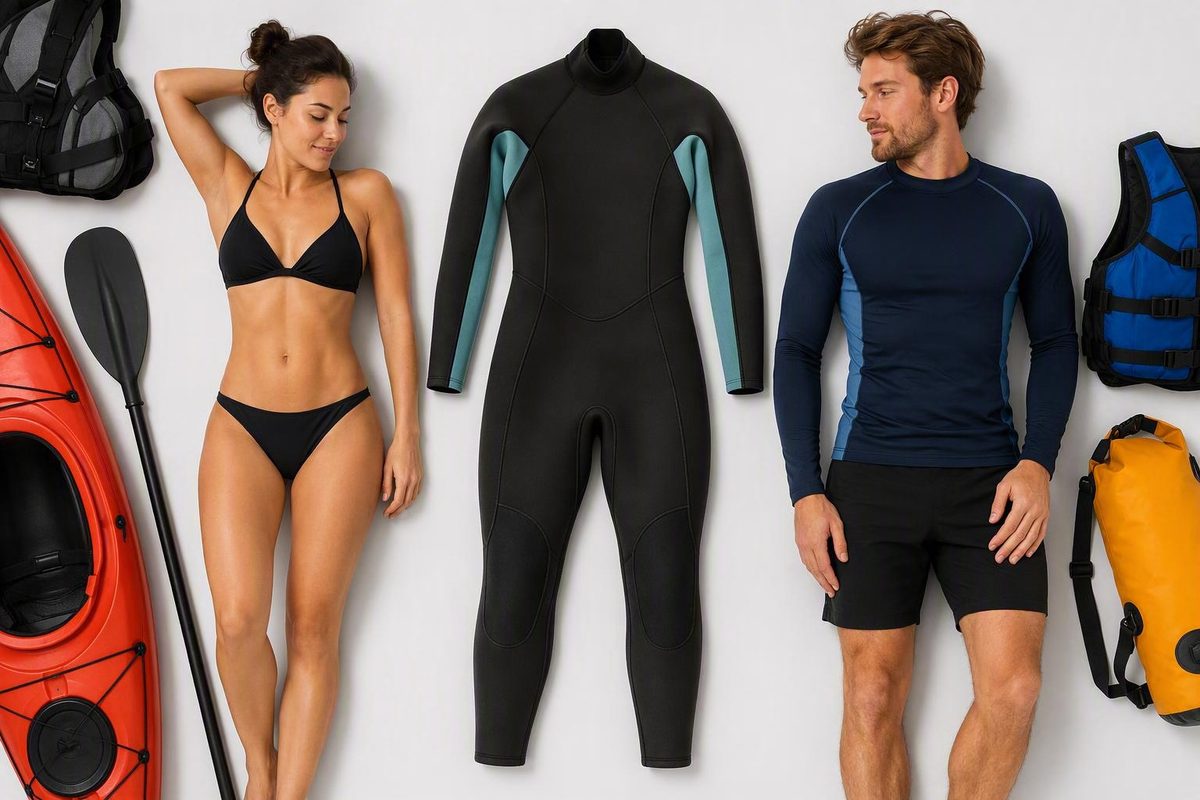
You generally do not need to wear anything under a properly fitted wetsuit. Bare skin, snug swimwear, or a thin fitted rash guard can all work. Choose according to coverage, changing convenience, friction, and conditions—but avoid anything bulky enough to bunch, restrict movement, or alter the suit’s fit.
The short answer: an underlayer is optional
A wetsuit is designed to fit closely against the body. Its neoprene and the thin layer of water retained inside provide the primary insulation, so a full wetsuit does not automatically require the kind of moisture-wicking base layer worn under ordinary outdoor clothing.
Choose an underlayer according to the job you need it to do:
| What to wear | Best reason to choose it | Main consideration |
|---|---|---|
| Bare skin | Minimum bulk and the cleanest fit | Requires a private place or changing aid |
| Snug swimwear | Coverage and easier changing | Avoid ties, hardware, and gathered fabric |
| Fitted rash guard | Friction control in a problem area | May increase pressure or warmth |
| Compatible thermal or neoprene liner | Colder conditions | Must be designed to fit beneath the wetsuit |
Swim briefs, jammers, fitted swim shorts, or a secure swimsuit are especially practical beneath a rental suit.
If you prefer wearing the wetsuit directly against your skin, use a large towel or changing robe for privacy before and after the session. That preserves the suit’s intended fit without requiring you to change openly.
What works under a wetsuit—and what tends to bunch
The best garments beneath a wetsuit share four qualities: thin, smooth, quick-drying, and close-fitting. Practical options include:
- Swim briefs or jammers
- Fitted swim shorts
- A secure one-piece or two-piece swimsuit
- A close-fitting tri suit
- A performance-fit rash guard
- A purpose-built liner designed to work beneath the wetsuit
A performance-fit rash guard is preferable to a loose surf shirt. Loose fabric can wrinkle under the arms, shift around the waist, or pull across the shoulders as you paddle or swim.
Avoid:
- Cotton underwear or T-shirts
- Loose boardshorts
- Bulky seams
- Waistbands that roll or gather
- Knots, beads, buckles, or metal trim
- Loose sleeves
- Fabric that folds at the hips or waist
These details may seem insignificant on land but become obvious once compressed beneath neoprene. Extra fabric can restrict shoulder movement, increase collar pressure, retain unwanted heat, and make a wet wetsuit harder to remove.
Perform a fit check after putting on the complete combination:
- Raise both arms overhead.
- Rotate your shoulders as you would while paddling or swimming.
- Bend at the hips.
- Check the collar, waist, and underarms for wrinkles or pressure.
- Take several full, comfortable breaths.
The wetsuit should remain snug without restricting normal movement. If adding an underlayer makes a correctly sized suit feel constricting, remove the layer rather than accepting reduced mobility.
Use a rash guard to solve friction—not every fit problem
A thin, snug rash guard can reduce friction from a seam or repeated contact point. It is not necessary beneath every full wetsuit, particularly when the suit already feels comfortable against bare skin.
A fitted, quick-drying top may be especially useful beneath a sleeveless or short-sleeve wetsuit. In that arrangement, it can address underarm or torso friction while providing coverage where skin remains exposed. Choose a performance fit that sits like a second skin rather than a relaxed shirt that can move independently beneath the neoprene.
Before adding another layer, make sure the wetsuit is positioned correctly:
- Pull it fully up through the lower legs and thighs.
- Seat the material properly around the hips.
- Work excess material upward before inserting your arms.
- Settle the torso and shoulders into place.
- Check that the collar lies evenly rather than pulling backward or sideways.
A wetsuit left too low at the hips can tug on the torso and collar, creating neck or shoulder rubbing that appears to call for another layer. Persistent rubbing may instead indicate incorrect positioning, an unsuitable seam location, or a poor match between the suit’s cut and your body.
Test the complete setup during a short session before using it for a race, long paddle, or extended open-water swim. Check your overhead reach, breathing comfort, heat level, friction points, and ability to remove the suit afterward. An underlayer should solve a specific problem without creating a new one.
For cold water, choose the suit before adding clothes
Ordinary clothing beneath a wetsuit is not a reliable substitute for a suit selected for the expected conditions. If you need more thermal protection, prioritize suitable wetsuit coverage and thickness—or a compatible, purpose-built thermal or neoprene liner—rather than stuffing bulky everyday layers underneath. REI’s paddling guidance similarly recommends selecting a thicker wetsuit for colder conditions instead of relying on an ordinary wicking base layer.
There is no single water-temperature cutoff that works for every person or activity. Water and air temperature, wind, exertion, likely immersion time, distance from shore, water conditions, and individual cold tolerance all affect the decision. A thin underlayer may change comfort, but it does not turn an unsuitable wetsuit into adequate cold-water protection. NRS advises evaluating water temperature, conditions, probable immersion time, and personal cold tolerance when preparing for cold-water boating.
Wetsuits and dry suits also require different layering strategies. A wetsuit fits closely and insulates primarily through neoprene and a thin layer of retained water. A dry suit is intended to keep water out and generally fits more loosely so insulating base layers can be worn beneath it. Mustang Survival’s comparison explains this fundamental difference between wetsuit and dry-suit construction. Do not transfer dry-suit layering advice directly to a close-fitting wetsuit.
For kayaking and other paddling activities, dress for possible immersion rather than the expected comfort of remaining in the boat. Wear an appropriate personal flotation device and choose immersion protection for the water, wind, trip length, and potential rescue time. An underlayer cannot replace either suitable immersion gear or cold-water planning. NRS’s guidance emphasizes wearing a PFD and preparing as though immersion will occur.
Do you wear the same base layers under a dry suit and a wetsuit?
No. A dry suit is designed to keep water out and leave room for insulating layers, making its base-layer system an important part of its warmth. A wetsuit fits closely and relies primarily on neoprene and retained water for insulation. Anything added beneath a wetsuit should therefore be low-profile and chosen for a specific purpose, such as coverage, friction control, or use as part of a compatible thermal system.