
The $20 Oregon Permit Costs Less Per Paddle
Oregon’s annual paddlecraft permit is $20 before checkout fees. Calculate your cost per outing and compare seven-day, annual and two-year options.
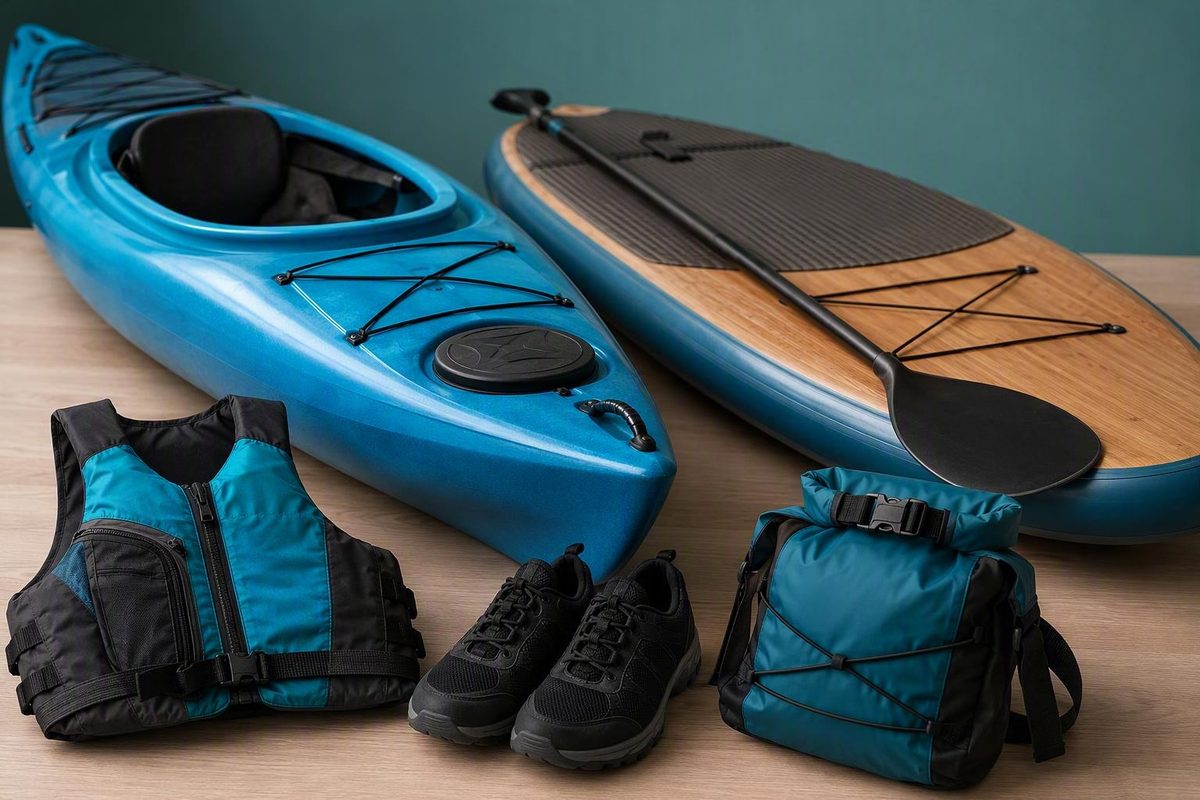
Oregon’s 2026 kayak and paddleboard permit costs $20 a calendar year before checkout charges, which works out to $2 per outing for someone who paddles 10 days. That arithmetic undercuts the idea that the Waterway Access Permit is inherently expensive, but not the strongest criticism of it: Oregon collects the money as an upfront lump sum even from occasional paddlers who previously owed nothing. The annual base price, expanded coverage and checkout charges are documented by KGW’s reporting based on Oregon State Marine Board guidance.
The Protest Made A Fair Upfront-Cost Argument
The consensus among repeal supporters was not simply that $20 is unaffordable. The Let Us Paddle campaign argued that Oregon had imposed a new charge on low-impact kayaks, stand-up paddleboards, packrafts and rafts to support invasive-species work that also protects motorized boating. Hundreds joined “Float for Freedom” protests, and supporters raised fairness, environmental-impact, funding and constitutional objections.
That position deserves a fair reading. A paddler who owns several inexpensive inflatables, uses Oregon water once or twice, or buys late in the calendar year sees a new payment at checkout rather than a smooth per-trip expense. The annual permit also expires December 31, so someone buying it in November receives much less usable time than someone buying in January.
The protest is also right that the 2026 rule reaches boats that were previously outside the general requirement. Beginning January 1, Oregon removed the former broad exemption for nonmotorized boats 10 feet or shorter. Ordinary short kayaks and inflatable paddleboards are no longer exempt merely because of length, according to Oregon’s Waterway Access Permit education guidance.
Where the flat-tax framing becomes less persuasive is repeated use. The same $20 base fee costs $10 per outing at two outings, $4 at five and $2 at 10. A paddler’s frequency and the number of separate seven-day periods matter more than the annual sticker price.
Enter your paddling days, separate trip windows and boats in use; the calculator shows which permit costs least for your pattern.
Oregon Permit Cost Per Outing
The default is 10 paddling days across five separate seven-day windows, with one covered boat in use. At base prices, the $20 annual permit wins at $2 per craft-outing.
Your Paddling Pattern
Price And Personal Comparisons
Five seven-day permits would cost $30. One annual permit costs $20, while buying the two-year product for one year would cost $35.
| Permit Strategy | Total Cost | Craft-Outings | Cost Per Craft-Outing | Fit For Inputs |
|---|---|---|---|---|
| Seven-day permits | $30 | 10 | $3 | 5 windows |
| Annual permit Lowest | $20 | 10 | $2 | 1 calendar year |
| Two-year permit Lowest | $35 | 10 | $3.50 | Includes unused second year |
Method: total permit cost is multiplied by simultaneous covered boats. Cost per craft-outing divides that total by paddling days × years × boats. This treats each entered seven-day window as needing a separate short permit.
Published prices: seven-day $6 base, $7.50 Boat Oregon, $8 ODFW; annual $20 base, $21.50 Boat Oregon, $22 ODFW; two-year $35 base, $36.50 Boat Oregon, $37 ODFW.
Source: Oregon State Marine Board fee guidance and the fee-inclusive totals reported in the article. Estimates depend on your trip grouping and checkout transaction.
The Checkout Price Is Usually More Than $20
Oregon offers three base permit durations for covered paddlecraft:
| Duration | Base Fee | Boat Oregon Total | ODFW Total |
|---|---|---|---|
| Seven days | $6 | $7.50 | $8 |
| One calendar year | $20 | $21.50 | $22 |
| Two calendar years | $35 | $36.50 | $37 |
The Boat Oregon totals include the stated $1.50 portal-provider charge for a single permit. ODFW’s totals reflect its stated $2 service fee. The Oregon State Marine Board permit FAQ explains the base prices, timing and portal charge.
That is why one source may call the annual permit $20 while an ODFW checkout shows $22. They are describing the base fee and a fee-inclusive total, respectively. A single annual permit through the Boat Oregon Store typically totals $21.50.
The final charge can depend on the channel and transaction. Putting several Boat Oregon permits in one cart may prevent the $1.50 portal charge from being repeated. Offices and license agents may not handle service charges identically, so the displayed cart total is the amount that matters.
The calculator defaults to base prices because those are the figures established for the permit itself. Its channel control can apply the published single-product totals. It does not assign a dollar value to a state-park day-use visit, a tank of gas or a fast-food meal because the supplied evidence contains no reliable figure for any of them. Those fields are left for the reader’s actual costs.
Trip Timing Determines Which Permit Wins
A seven-day permit has a $6 base price. It is usually the economical choice for one short vacation or one cluster of outings within the applicable seven-day period. Two such periods cost $12 before transaction charges, still below the $20 annual base fee. Four separately covered periods cost $24, making the annual permit cheaper.
The number of paddling days alone therefore cannot settle the choice. Ten days concentrated in one seven-day period are impossible, but 10 days split across two eligible periods could be covered for a $12 base total. Ten isolated day trips spread through five seven-day windows would cost $30 in short permits, so the $20 annual permit wins.
The sales channel also affects when the short permit begins. A Boat Oregon seven-day permit starts on its purchase date and cannot be scheduled for later. ODFW allows the buyer to select seven consecutive days. Buying through Boat Oregon too early can use up part of the permit before launch.
The annual product is valid only for the current calendar year. It begins on the purchase date and expires December 31, not 12 months after purchase. The two-year permit has a $35 base price and expires December 31 of the following calendar year.
For an eligible buyer paddling in two calendar years, two annual base fees total $40. The two-year product costs $35, a $5 base-price saving. Eligibility should still be checked at checkout, particularly for a nonresident, because the available evidence does not establish that every nonresident purchaser can obtain the two-year option.
One Permit Can Move Between Paddlecraft
The requirement applies per covered boat in use, not automatically per paddler, passenger or craft owned. A permit can be transferred between nonmotorized boats.
One person who alternates between a kayak and a paddleboard can use one permit if only one craft is operated at a time. Two people simultaneously using two boards generally need two permits. A family with four people but only two covered kayaks on the water generally starts with two permits, subject to any operator or activity exemption.
The decisive number is the maximum number of covered boats operating simultaneously. Three boats sitting at the launch do not require three permits if only one is ever used at a time. Once two covered boats are operated together, two permits are needed.
That distinction can materially change the household cost. An owner with several boats does not owe $20 for every hull merely because each is stored at home. Transferability does not, however, let one permit cover multiple boats on the water simultaneously.
Short Kayaks Generally Need The Permit
Oregon’s 2026 requirement generally covers nonmotorized boats of any length, including hardshell and inflatable kayaks, conventional stand-up paddleboards, canoes, rafts, drift boats and packrafts. It applies to Oregon residents and visitors.
The former general exemption for boats 10 feet or shorter no longer describes ordinary use on lakes, reservoirs and rivers. KPTV’s coverage of the expanded rule likewise reports that nonmotorized boats of any size are covered.
The rule is broad but not universal. Operators age 13 or younger are exempt. Surfboards, sailboards and kiteboards are exempt, while an ordinary stand-up paddleboard generally is not. A nonmotorized boat under 10 feet may qualify for a limited whitewater exemption only when used for whitewater recreation on an officially identified Whitewater Exempt Waterway. Length by itself is insufficient.
Other exemptions can depend on designated dates or specific official, tribal, lifesaving or federally permitted uses. Anyone relying on an exemption should verify the exact craft, operator, waterway, activity and date against current Oregon guidance. The expansion should not be read more broadly than the state’s stated exceptions, but the old under-10-foot rule should not be used as a general defense.
A Waterway Access Permit is separate from boat title and registration. Applying the permit requirement to a kayak does not make that kayak a registered vessel. Motorized boats and qualifying sailboats use different registration and aquatic-invasive-species documentation rules.
Transporting A Kayak Does Not Trigger The Fee
A person driving through Oregon with a kayak, canoe or paddleboard does not need a Waterway Access Permit merely because the craft is being transported. The access requirement is tied to covered use on Oregon waters.
Watercraft inspection rules remain separate. A vehicle carrying or towing watercraft must stop at an open Oregon inspection station encountered along its route, even if the boat will not be launched in the state. The absence of an access-permit obligation does not create an inspection-station exemption.
Permits are sold through the official Boat Oregon Store, the ODFW Electronic Licensing System, ODFW license agents, participating ODFW offices and the Oregon State Marine Board office in Salem. Buyers should check the product name, effective date, expiration, eligibility and complete cart total before paying.
Oregon allows proof to be printed or displayed digitally when requested by marine law enforcement. Saving the permit file locally avoids depending on cellular service at a remote launch.
The Fee Funds Access And Invasive-Species Work
Oregon directs permit revenue toward nonmotorized waterway access and aquatic-invasive-species inspection or prevention. Access spending can include launch improvements, ramps, restrooms and grants for new or improved access. Prevention funding can support inspection stations and related work intended to limit the movement of invasive species.
Those uses do not resolve the campaign’s distributional objection. Paddlers can reasonably dispute whether this particular group should pay through an upfront permit or how revenue should be divided. They do explain why Oregon treats the product as a Waterway Access Permit rather than kayak registration.
Operating without required proof can carry more than the permit price. KATU reported a potential $115 Class D violation, along with an agency spokesperson’s statement that warnings would be issued for noncompliance. That statement is not a guarantee that every paddler will receive a warning before a citation. The reliable course is to obtain the required permit and keep proof accessible.
The Repeal Campaign Did Not Change The Operative Rule
The Let Us Paddle petition sought to repeal the expanded requirement, but signature gathering and protest activity did not themselves suspend the law. The linked Central Oregon Daily page carried a URL describing the bid as likely to miss the November ballot, but that ballot-status page is currently unavailable. Its exact report therefore cannot be independently verified from the page now served at that address.
What can be said without overclaiming is that the available evidence does not establish an enacted repeal, a voter-approved change or a suspension of enforcement. Paddlers should treat the 2026 requirement as operative unless Oregon publishes a verified legal change.
The policy argument remains narrower than the protest slogan suggested. For a frequent paddler, $20 spread across a season is a small per-outing charge. For an occasional paddler, a late-year buyer or a household forced to pay for several simultaneously used boats, the upfront collection method can still feel disproportionate. The permit’s arithmetic is generally modest; its lump-sum design is the more substantial grievance.