
Why Drowning Leads Boating Deaths—and What Usually Happens First
The short answer: drowning is the primary cause of boating fatalities
In the cited U.S. recreational-boating evidence, drowning is the leading direct cause—or fatal mechanism—of death.
A boating-education provider summarizing 2022 U.S. Coast Guard data reports 636 deaths and says drowning accounted for 75% of fatalities for which the cause of death was known. That qualification is essential: the percentage applies to cases in which investigators knew the cause of death, not necessarily to every recorded boating death (BOATERexam’s summary of 2022 recreational-boating statistics).
Other secondary sources reach the same basic conclusion. America’s Boating Club identifies drowning as the leading cause of boating fatalities, while a Florida-focused article identifies drowning as the leading cause of death in that state’s boating accidents (America’s Boating Club overview; Florida-focused discussion). Neither source is the underlying federal or state statistical report, so the claims require the stated source and geographic limitations.
The direct answer therefore depends on what cause means:
- If it means the direct cause or mechanism of death, the answer in the cited U.S. evidence is drowning.
- If it means what started the incident, the answer could be a fall overboard, ejection, collision, capsize, swamping, or grounding.
- If it means what contributed to the incident, the answer could be alcohol, operator inattention, excessive speed, poor lookout, inexperience, weather, or unsafe loading.
- If it means what protection was missing after water entry, the answer may be a worn life jacket.
These descriptions are not contradictory. A distracted operator might strike an object, causing a passenger to be ejected. The passenger may then drown. In that sequence, inattention is a contributing factor, the collision and ejection are initiating events, and drowning is the fatal mechanism.
That distinction explains why boating-safety articles can appear to give different answers to the same question.
Why drowning, alcohol, and inattention can all appear as the answer
Boating incidents develop in stages. Confusion arises when articles use the word “cause” for different stages without defining it.
A useful framework separates four categories:
| Category | What it describes | Examples |
|---|---|---|
| Fatality mechanism | The process that directly results in death | Drowning |
| Initiating event | The event that begins the dangerous sequence | Falling overboard, ejection, capsizing, collision |
| Contributing factor | A behavior, condition, or failure that makes the event more likely | Alcohol, excessive speed, poor lookout, operator inattention |
| Protective factor | Equipment or action that can reduce harm after an incident | Wearing a properly fitted life jacket |
This framework explains why alcohol sometimes appears as the leading answer. It may be a leading known contributing factor in fatal boating accidents, but that does not make it the direct mechanism responsible for most deaths. Alcohol can impair judgment and physical performance, contributing to a collision, unsafe maneuver, fall overboard, or capsize. Drowning can still be the fatal outcome. Sea Tow uses the more precise description “leading known contributing factor” when discussing alcohol in fatal boating accidents (Sea Tow’s explanation of fatal-accident contributors).
The same distinction applies to operator inattention. Inattention may rank highly among reported accident or collision factors. An operator might fail to notice another vessel, a fixed object, shallow water, changing traffic, or a passenger in an unsafe position. But inattention is not ordinarily the direct mechanism of death. It explains why a dangerous event began.
Failure to wear a life jacket belongs in a fourth category. It generally does not make vessels collide, create rough weather, overload a boat, or cause an operator to lose situational awareness. Instead, it removes a layer of protection after someone enters the water.
The most accurate concise answer is therefore:
In the cited U.S. evidence, drowning is the leading direct cause of recreational-boating death, while alcohol, inattention, falls overboard, collisions, and capsizing may contribute to or initiate the fatal sequence.
The fatal-event chain: how a boating incident becomes a drowning
A fatal boating incident can often be understood as a four-stage chain:
- Operational or environmental factor
- Initiating incident
- Water entry
- Fatal mechanism
Separating them nevertheless reveals several points at which a fatal outcome might be avoided.
Consider an inattentive operator who fails to see a fixed object. The vessel collides with it, and a passenger is ejected. The passenger enters the water, cannot remain afloat or reach safety, and drowns. In this example:
- Inattention is the operational factor.
- Collision and ejection are the initiating events.
- Water entry creates the immediate danger.
- Drowning is the fatal mechanism.
A second sequence might begin with alcohol. Impairment can affect judgment, coordination, reaction time, balance, and swimming ability. An operator or passenger loses balance and falls overboard. If that person is not already wearing flotation, water entry becomes more dangerous because the device must first be found, reached, and put on during an emergency.
A third sequence may begin with loading or conditions. The vessel capsizes, putting some or all occupants into the water. The cited boating-safety guidance identifies overloading and improper weight distribution as contributors to capsizing, particularly in smaller vessels (America’s Boating Club discussion of fatal boating incidents).
Supported pathways to drowning include:
- Falling overboard
- Being ejected during a collision or abrupt maneuver
- Capsizing or swamping
- Entering the water during or after some collisions
This is not a national ranking. The supplied evidence does not establish which initiating event currently precedes the greatest number of U.S. recreational-boating drownings.
Historical research also shows why period and jurisdiction matter. A peer-reviewed Australian study examined 333 boating deaths from 270 incidents between 1992 and 1998. Capsizing initiated 36% of the fatal-event sequences in that dataset. The finding is historical and specific to Australia; it does not establish that capsizing is the leading initiating event in current U.S. fatalities (2005 Australian boating-fatality study).
The practical lesson is broader than any one ranking. Boaters can address several links in the chain: avoid impairment, maintain a lookout, operate at a suitable speed, load the vessel safely, monitor conditions, and wear flotation in case the preventive measures fail.
What the cited statistics show—and what they do not
The available figures come from different years, jurisdictions, and secondary sources. They should remain separated rather than being combined into one universal statistic.
| Year and scope | Reported figures | Important limitation |
|---|---|---|
| 2022 U.S. recreational boating | 4,040 accidents, 2,222 injuries, and 636 deaths; drowning accounted for 75% of fatalities with a known cause of death (2022 summary) | Commercial boating-education summary attributing the figures to the U.S. Coast Guard |
| 2024 U.S. recreational boating | 3,887 incidents, 2,170 injuries, 556 deaths, and 4.8 deaths per 100,000 registered recreational vessels (2024 summary) | Commercial boating-safety summary rather than an independently reviewed Coast Guard report |
| 2024 U.S. drowning and life-jacket figures | About 75%–76% of boating deaths attributed to drowning; 87% of drowning victims reportedly were not wearing life jackets (2024 fatality discussion) | Law-firm summary attributing statistics to outside organizations |
| Canadian course material, date unspecified | 90% of people who drowned while boating reportedly were not wearing a life jacket or PFD (Canadian course material) | The supplied page does not identify the date or underlying dataset |
| Australia, 1992–1998 | 333 deaths studied; capsizing initiated 36% of fatal-event sequences (Australian study) | Historical, jurisdiction-specific research rather than current U.S. evidence |
These figures support a bounded conclusion: drowning leads the direct causes of death in the cited U.S. recreational-boating evidence. They do not establish one fixed percentage for all years, countries, vessel types, or reporting systems.
The 2024 secondary account’s characterization of drowning as approximately 75%–76% of boating deaths should not be presented as an independently verified federal figure. Likewise, its life-jacket percentage and the corresponding 2022 percentage should remain tied to their respective reporting years.
The annual totals also do not establish a long-term trend. Comparing isolated figures from 2022, 2023, and 2024 is not enough to show that boating is becoming consistently safer or more dangerous. A defensible trend analysis would require comparable primary reports over a longer period.
Geography further limits the conclusions. Florida-focused evidence can describe Florida but should not automatically be applied to inland Canada, Australia, the entire United States, or another jurisdiction. Vessel mix, operating conditions, boating seasons, reporting practices, and operator requirements may differ.
Most statistics in this article come from commercial boating organizations, educational providers, and law-firm summaries that attribute their numbers to government agencies. The underlying government reports were not independently reviewed for this source pack. That limitation does not make the figures unusable, but it requires clear attribution, careful definitions, and restraint about precision.
Why wearing a life jacket is the clearest survival measure
Life-jacket nonuse is best understood as a major risk factor in fatal drownings, not ordinarily as the cause of the initiating accident.
A life jacket does not maintain a lookout, steer the vessel, correct poor loading, stop an impaired operator, or prevent every collision or capsize. Its principal role begins after a person enters the water: flotation can improve protection during immersion, although it cannot guarantee survival.
The year-specific evidence should remain separate:
- A summary of 2022 U.S. data reports that 85% of drowning victims were not wearing life jackets (2022 life-jacket figure).
- A law-firm account summarizing 2024 U.S. data reports a corresponding figure of 87%. This is the source’s attributed statistic, not an independently reviewed federal finding.
- An undated Canadian boating course reports 90%, while providing no date or underlying dataset on the supplied page.
These percentages should not be averaged or used to infer a trend. They concern different years and, in the Canadian example, a different jurisdiction with unclear dating.
The consistent practical point is that keeping flotation aboard is not the same as wearing it. An unexpected fall, ejection, or capsize may occur before someone can retrieve and put on a stored device. Wearing the life jacket before the emergency removes that extra step.
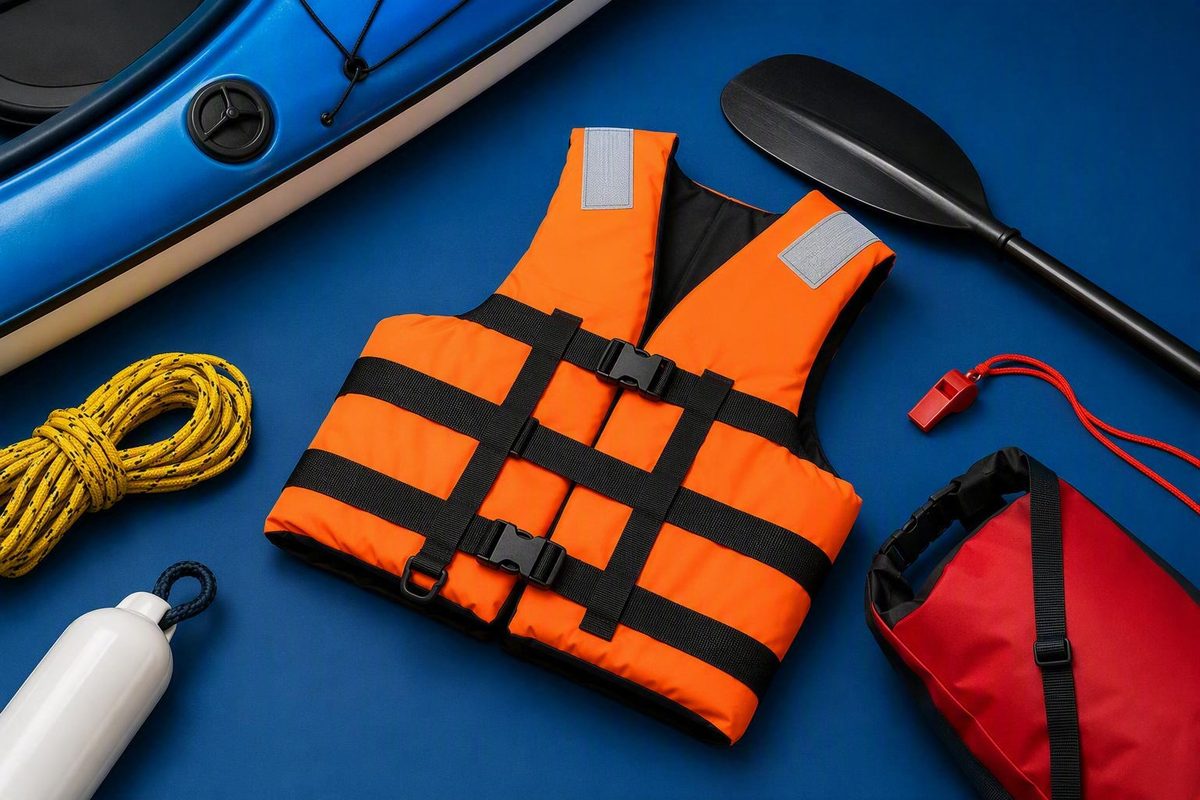
Before departure, make sure each person has an appropriate, serviceable life jacket and can secure it properly. Check that:
- Straps, buckles, fabric, and flotation components appear serviceable.
- The intended wearer can fasten and adjust the device.
- The jacket remains secure rather than riding excessively upward.
- Passengers who need help receive it before departure.
- The jacket is worn during the trip rather than stored for later use.
A life jacket is not a substitute for sober operation, sound judgment, maintenance, or attention. Boating skill is not a substitute for flotation either. Preventing an accident and improving survival after water entry are separate safety layers.
The major contributors boaters can control
Drowning describes how many victims die. Contributing factors help explain how the fatal sequence began or became more severe.
Alcohol and drug impairment
Alcohol is accurately described as a leading known contributing factor in fatal U.S. boating accidents. It should not be described as the direct cause of most boating deaths.
One secondary source attributes 92 U.S. boating deaths in 2024 to alcohol involvement while separately identifying drowning as the leading fatal mechanism (2024 alcohol-involvement figure).
Alcohol can impair judgment, coordination, reaction time, and balance. Those effects can contribute to speeding, navigation mistakes, failure to recognize deteriorating conditions, unsafe movement aboard, or a fall overboard. Alcohol can also impair swimming ability after water entry.
The safest arrangement is to designate a sober operator before departure and keep that person free from alcohol and impairing drugs throughout the trip. Passengers should also recognize that impairment can increase fall-overboard risk even when they are not operating the vessel.
Inattention and improper lookout
Operator inattention and improper lookout are related but distinct. Inattention is a general failure to remain focused on operating the craft. An improper lookout means failing to monitor the water effectively for vessels, people, markers, debris, fixed objects, or changing conditions.
A Sea Tow summary of 2023 Coast Guard statistics reports:
- 586 accidents and 33 deaths associated with operator inattention
- 414 accidents and 44 deaths associated with operator inexperience
- 211 accidents and 79 deaths associated with alcohol involvement
They also show why rankings change with the measure used: inattention was associated with more reported accidents in this summary, while alcohol was associated with more deaths (Sea Tow’s 2023 accident-factor summary).
Maintaining a lookout means monitoring ahead, astern, and to both sides, including blind spots and approaching traffic. Another capable person can assist when traffic, towing activity, visibility, or workload makes that useful. Phones, conversations, equipment adjustments, navigation displays, and scenery can all compete for attention.
Speed, experience, and navigation
Excessive speed reduces the time available to identify a hazard, decide what to do, and maneuver.
Inexperience can compound those hazards. Failure to understand or apply navigation rules can then turn a manageable encounter into a collision or abrupt evasive maneuver.
The knowledge must still be applied throughout the trip.
Loading, weather, and machinery
Unsafe loading and poor weight distribution can reduce stability and affect handling. On small boats and paddling craft, moving passengers or shifting equipment may have an immediate effect. Loads should remain within the craft’s stated limits and be distributed deliberately.
Weather and water conditions can alter the event chain. Wind, waves, current, and reduced visibility can turn a navigation error or equipment problem into a larger emergency. Operators should assess whether the conditions suit the vessel and the experience of everyone aboard.
Machinery and equipment problems create another group of risks. Predeparture inspection and maintenance cannot eliminate every failure, but they can identify visible defects before departure.
Alcohol, inattention, speed, inexperience, weather, loading, navigation errors, and machinery problems are recurring contributors. The evidence does not justify calling any one of them the universal primary cause of boating death across every year, jurisdiction, and vessel type.
A practical plan for reducing fatality risk
Begin by putting on a properly fitted life jacket before getting underway and keeping it on during the trip. Do not make retrieval after a fall, ejection, or capsize the safety plan.
Then address each link in the fatal-event chain.
Before departure
Choose a sober operator. Decide who will operate the vessel before anyone drinks alcohol or uses an impairing substance. The designated operator should remain sober for the entire outing.
Check conditions. Review the forecast and assess actual wind, waves, visibility, current, and other relevant water conditions. Consider how conditions may change before the planned return.
Inspect the craft. Check the hull, drain plugs where applicable, steering, propulsion, fuel or battery status, paddles, lines, and essential safety equipment. Address known defects before leaving.
Review loading and weight distribution. Stay within the craft’s stated limits. Distribute passengers and equipment so the vessel remains stable and controllable, and secure gear that could shift.
Check life jackets. Make sure everyone has a suitable, serviceable jacket that fits and is fastened correctly.
Share a float plan. Tell a responsible person ashore where the trip begins, the intended route, who is aboard, what craft is being used, and when the group expects to return.
These preparations—including safety-equipment checks, a float plan, passenger briefing, weather monitoring, and operator vigilance—are among the measures recommended by the cited boating-safety guidance.
Brief the passengers
Explain:
- How to fasten and adjust life jackets
- Where passengers should sit or stand
- How to move without unnecessarily destabilizing the craft
- Where communication and emergency equipment is kept
- How to alert the operator to a hazard
- What to do if someone falls overboard
- Why sudden movement can be dangerous on a small boat or kayak
- When passengers should remain seated
The briefing should fit the vessel and activity. A kayak, canoe, personal watercraft, small open boat, and pontoon do not have identical operating risks.
While underway
Maintain a continuous lookout and minimize distractions. Select a speed that leaves time to identify hazards and respond. Reassess the plan if weather changes, visibility declines, traffic increases, passengers become tired, or the vessel begins handling differently.
Continue monitoring loading and passenger movement after launch. Water aboard, shifted equipment, or a change in seating can affect stability.
If conditions exceed the capabilities of the operator, passengers, or craft, change the plan rather than treating the original route as mandatory.
A brief every-trip checklist
For motorboats, small open boats, kayaks, canoes, and other recreational craft:
- [ ] Everyone is wearing a properly fitted, serviceable life jacket.
- [ ] A sober, capable operator is designated.
- [ ] Weather and water conditions have been checked.
- [ ] The vessel and essential equipment have been inspected.
- [ ] Loading and weight distribution are appropriate.
- [ ] Passengers know how to move safely and what to do in an emergency.
- [ ] A lookout will be maintained and distractions minimized.
- [ ] Speed will suit visibility, traffic, water, and weather.
- [ ] Someone ashore knows the route and expected return time.
- [ ] The operator has appropriate boating-safety knowledge for the trip.
The risk profile is not identical across pontoons, powerboats, personal watercraft, canoes, and kayaks. Even so, the same two-part strategy applies: reduce the likelihood of an initiating incident through sober, attentive operation, and improve protection after unexpected water entry by wearing a life jacket.
Frequently asked questions
Is drowning the cause of the accident or the cause of death?
Drowning is generally the cause or mechanism of death, not the event that initiated the accident.
The sequence may begin with a collision, fall overboard, ejection, capsize, swamping, grounding, machinery problem, or operational error. That event places someone in the water or prevents the person from reaching safety. Drowning may then become the fatal outcome.
Clear reporting should distinguish among:
- What contributed to the incident
- What event occurred
- How the person entered the water
- What directly caused the death
Is alcohol the leading cause of boating fatalities?
Alcohol may be a leading known contributing factor in fatal boating accidents, but it is not the leading direct mechanism of death in the cited U.S. evidence. Drowning is.
A 2022 law-firm summary attributes 88 boating deaths that year to alcohol involvement. The source also presents a percentage whose denominator is unclear in the supplied material, so the count is more defensible than repeating that percentage (2022 alcohol discussion).
Alcohol and drowning are therefore not competing answers. Alcohol may start or worsen the incident chain through impaired judgment, reaction, coordination, balance, or swimming ability; drowning may be the final mechanism of death.
What percentage of boating drowning victims were not wearing life jackets?
The percentage depends on the reporting year, jurisdiction, and source. The cited summaries report different figures for 2022 U.S. data, 2024 U.S. data, and undated Canadian course material.
Those values should not be combined into a universal percentage or treated as evidence of a trend. The underlying U.S. reports were not independently reviewed for this article, and the Canadian page does not provide a date or dataset.
The practical conclusion is more stable than any one percentage: storing flotation aboard is not equivalent to wearing it before an unexpected fall, ejection, or capsize.
What events commonly lead to fatal boating drownings?
Supported pathways include falling overboard, being ejected, capsizing, swamping, and entering the water during or after some collisions. Grounding or machinery problems may also contribute to a broader emergency, depending on the circumstances.
Common preceding factors include operator inattention, improper lookout, excessive speed, impairment, inexperience, difficult weather, unsafe loading, poor weight distribution, and navigation mistakes. The cited evidence does not establish which initiating event currently precedes the most fatal drownings across the United States.
Does the primary cause differ by state, country, or vessel type?
It can. The answer depends on the definition of “cause,” reporting period, location, conditions, and vessel mix.
The cited U.S. and Florida-focused sources identify drowning as the leading direct cause of death, but proportions and preceding events may vary. The undated Canadian course reports a different life-jacket nonuse figure, while historical Australian research found capsizing to be the most frequent initiating event in its 1992–1998 dataset. None of those jurisdiction-specific findings should automatically be applied everywhere.
Statistics from one category should not be assumed to describe another.
The bottom line: In the cited U.S. recreational-boating evidence, drowning is the leading direct cause of death. Alcohol, inattention, poor lookout, speed, weather, loading problems, and vessel events can begin or worsen the chain that leads to it. Address both sides of the risk: prevent the incident through sober, attentive operation, and improve protection after water entry by wearing a properly fitted life jacket.