
How to Tell Whether Your Life Jacket Is Still Safe to Use
The complete jacket usually has no universal date. Hydrostatic inflators may show one, while heat, humidity or crushing can damage even unused gear.
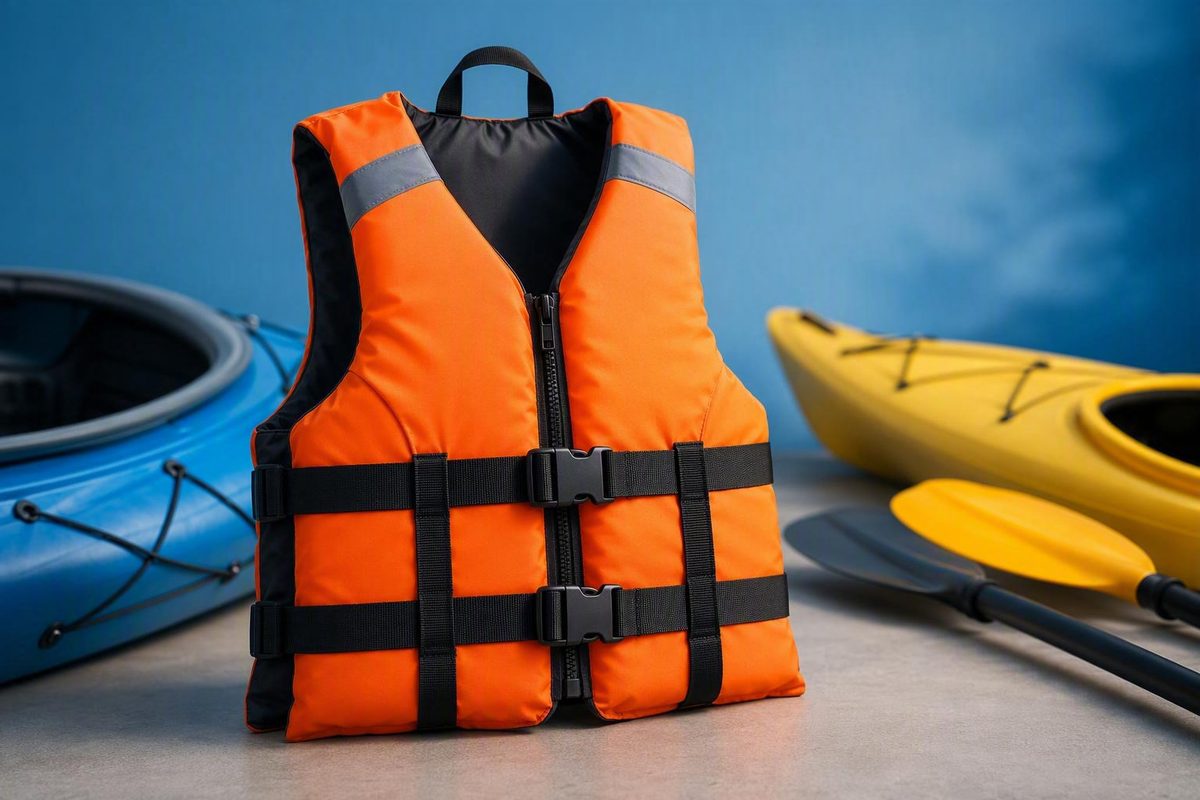
The short answer: usually no fixed expiry date
A complete life jacket generally does not have one universal calendar expiry date. Its continued safety depends on its condition, fit, structural integrity, flotation or air retention, storage history, and the instructions for its exact make and model. CanBoat likewise distinguishes between a life jacket expiring and one becoming unsafe through damage or failed components.
That does not mean a life jacket lasts forever. A foam jacket can lose effective flotation or develop damaged fabric, seams, straps, and fasteners. An inflatable jacket can leak or fail to inflate because its bladder, cylinder, inflator, or activation mechanism is no longer serviceable. Even an undamaged jacket can be unsuitable if it is the wrong size or cannot be secured correctly.
This article uses “life jacket” as a general term for wearable flotation equipment. Official categories, terminology, performance characteristics, and wearer-positioning requirements differ among jurisdictions and products. Use the classification printed on your own device and the terminology of the boating authority where you operate.
It helps to think in terms of two clocks:
- The complete jacket has a condition-based service life. Age provides context, but fit, structure, flotation, and performance determine whether it can remain in use.
- Certain inflatable components have dated maintenance cycles. A bobbin, hydrostatic inflator, cylinder, or another replaceable component may carry a printed date or have a model-specific replacement interval.
Age alone proves neither safety nor failure. An older jacket stored carefully may remain serviceable, while a much newer one exposed to crushing, sunlight, salt, chemicals, heavy use, or damp storage may not.
You may encounter several suggested replacement periods online. Vaikobi, for example, says heavily and frequently used paddling or sailing PFDs may need replacement after approximately 12–24 months, but presents that as usage-dependent guidance rather than a universal expiry rule. (Vaikobi)
Sea-Doo recommends replacement after three to five years for the water-sports PFDs discussed in its guidance, while also emphasizing condition, buoyancy, use, care, and storage. That is a manufacturer recommendation, not a legal expiry period for every life jacket. (Sea-Doo)
Another commercial boating guide says many manufacturers suggest that a well-maintained jacket may last up to ten years, but it also bases replacement on condition, performance, labeling, and manufacturer instructions. (Drive a Boat USA)
These figures should prompt inspection, not substitute for it. The most reliable sequence is:
- Identify the exact type and model.
- Find the label and owner’s manual.
- Inspect the structure and fit.
- Check the flotation system.
- Replace dated, damaged, or discharged model-specific components.
- Follow the manufacturer’s inspection, servicing, and replacement instructions.
Do not discard a sound jacket solely because a generalized article gives a lifespan estimate. Equally, do not trust a jacket merely because it is younger than that estimate.
Start by identifying which type of life jacket you own
The inspection process changes because foam and inflatable life jackets create flotation in fundamentally different ways.
An inherently buoyant jacket uses foam or another fixed buoyant material. It does not need to be activated, but the buoyant material and the structure holding it in position must remain intact and effective.
An inflatable life jacket normally relies on a sealed bladder that fills with gas. The bladder must hold pressure, and the inflation system must be correctly installed, armed, and serviceable. Some models inflate only when the wearer pulls a tab. Others use an automatic water-sensitive mechanism, while certain designs use a hydrostatic inflator.
Those systems do not necessarily contain the same parts or follow the same maintenance schedules. Transport Canada advises owners to identify whether an inflatable jacket is automatic or manual, check it whenever it is worn, and follow the instructions for the exact make and model. (Transport Canada)
Start by locating, where fitted:
- The manufacturer and model information
- The approval label or tag
- The owner’s manual or a manufacturer-hosted copy
- The size and intended-user markings
- The inflation-system status indicator
- The CO2 cylinder and its markings
- The bobbin, dissolving element, or hydrostatic inflator
- Printed manufacturing, replacement, or expiry dates
- Previous inspection or servicing records
These items do not appear in the same place on every jacket. Access enclosed components only as the manual directs. If the system is unfamiliar, obtain the correct manual or ask the manufacturer or an authorized service provider for help.
The following comparison is a general guide. The exact manual controls the required checks, compatible replacement parts, and maintenance schedule.
| Jacket type | Flotation method | Pre-use checks | Periodic maintenance | Potentially dated parts | Typical reasons to remove it from service |
|---|---|---|---|---|---|
| Foam or inherently buoyant | Fixed buoyant material | Fabric, seams, straps, fasteners, visible foam, fit, and label | Cleaning, drying, regular inspection, and any model-specified flotation check | Usually no dated part within the basic foam system | Compromised foam, inadequate flotation, water retention, structural damage, or failed fit |
| Manual inflatable | Gas-filled bladder activated by a pull tab, with oral backup where provided | Cover, indicator, pull tab, cylinder, mechanism, bladder condition, straps, and fit | Model-specified leak testing, mechanism inspection, re-arming, and servicing | Cylinder or other mechanism parts may carry markings or schedules | Leakage, discharged or damaged cylinder, inaccessible pull tab, structural damage, or inability to arm correctly |
| Automatic inflatable | Gas-filled bladder activated by a water-sensitive system and generally supported by manual activation | Manual-inflatable checks plus the automatic element | Leak testing and scheduled replacement of applicable activation parts | Bobbin, dissolving element, cylinder, or inflator, depending on design | Out-of-date or degraded activation part, leakage, corrosion, discharge, or failed mechanism |
| Hydrostatic inflatable | Gas-filled bladder activated by a hydrostatic mechanism under its designed conditions | Inflator status and date, cylinder installation, pull tab, cover, bladder, and fit | Model-specific leak testing and inflator replacement | Certain hydrostatic inflators display an expiry year or date | Out-of-date inflator, leakage, damage, discharge, or inability to re-arm |
If your jacket combines inherent and inflatable buoyancy, rely on its exact classification and manual rather than treating it as a basic foam or inflatable model.
A pre-use inspection that takes only a few minutes
Inspect a life jacket before relying on it. Put it somewhere well lit, open or unfold it only as its instructions permit, and use the same sequence each time.
Check the exterior and structure
Look for:
- Tears, punctures, brittle material, oil stains, or chemical contamination
- Excessive abrasion or severe fading
- Separated seams, broken stitching, or pulled fabric
- Frayed or cut straps and weakened attachment points
- Buckles, zippers, snaps, or other closures that do not work correctly
- Corrosion on metal parts
- Severe mould or mildew
- Visible foam that is deteriorated or remains crushed
Fading alone does not prove that flotation has been lost, but severe fading can accompany prolonged environmental exposure. Appearance alone also cannot prove that the jacket remains adequately buoyant.
Check the fit
- Confirm that the jacket is the correct size for the wearer under the manufacturer’s sizing instructions.
- Put it on over the clothing likely to be worn.
- Secure every required zipper, buckle, strap, and closure.
- Adjust it snugly without making it constrictive.
- Move your shoulders and arms as you would while paddling or handling the boat.
- Check that the jacket does not ride excessively upward or slip out of position.
A jacket that is too large or loosely adjusted can move out of place. One that is too small or excessively tight may restrict movement. The Life Jacket Association’s course emphasizes manufacturer sizing, snug adjustment, mobility, and controlled fit testing. (Boat-ed)
Add these checks for an inflatable jacket
Inspect:
- The bladder cover and closures
- The manual pull tab and its accessibility
- The oral inflation tube and cap
- The inflation mechanism
- The status indicator
- The cylinder’s installation, seal, markings, and physical condition
- Any visible date on a bobbin or hydrostatic inflator
Do not assume that red and green have exactly the same meaning on every product. An indicator may show whether a component is installed, whether the mechanism has fired, or whether re-arming is required. A manufacturer may also require additional checks even when an indicator appears green.
Stop and investigate if you find severe damage, a failed fastener, a detached or badly frayed strap, deteriorating foam, an apparent bladder leak, a discharged cylinder, or a system that cannot be confirmed as ready. Manufacturer guidance for non-inflatable jackets identifies torn or brittle fabric, frayed straps, damaged fasteners, deteriorating foam, severe mould, and inadequate buoyancy as reasons to remove a device from use. (Mercury Marine)
Do not wear a jacket on the water until the problem has been resolved by replacement or by evaluation and servicing permitted by the manufacturer.
Finally, inspect the approval label. A missing or unreadable label may affect whether a jacket satisfies local carriage or use requirements, but that consequence is not universal. It also makes the model, size, intended use, and limitations harder to verify. If compliance matters and the label cannot be read, consult the manufacturer and the boating authority for the jurisdiction where the jacket will be used.
How to assess a foam life jacket
A foam life jacket has no gas cylinder to service, but that simplicity does not make it permanent. Repeated compression, water exposure, heat, ultraviolet exposure, chemicals, abrasion, and poor storage can damage the buoyant material or the structure that keeps it in position.
Remove the jacket from use if the foam:
- Remains compressed rather than returning to shape
- Is visibly deteriorating or missing
- Absorbs and retains water rather than draining
- Cannot provide adequate flotation
Inspect the shell as well. Damaged fabric, seams, straps, or fasteners can make a jacket unusable even if its foam still floats.
A basic non-worn water check
CanBoat describes this simple screening check for a foam device:
- Put the jacket in a tub or suitable container.
- Add enough water for it to float.
- Check whether it rises to the surface.
- Remove it and confirm that it drains.
If the jacket retains water like a sponge rather than draining, CanBoat advises treating the foam as compromised and replacing the device. It also warns against storing foam jackets under heavy objects or in spaces that compress them. (CanBoat)
This check can reveal obvious water absorption or flotation failure. It does not measure whether the jacket still meets every element of its original approval specification.
A cautious wearer flotation check
Consider a wearer check only after the jacket has passed its visual, structural, and fit inspection. Use calm, controlled, shallow water where the wearer can regain footing easily, with appropriate supervision and a safe way to exit.
Do not conduct a screening test in deep, cold, rough, moving, or unsupervised water.
Secure the jacket exactly as intended and enter the water gradually. Observe whether it supports the wearer as described by the product instructions. In Vaikobi’s controlled screening method, needing to tread water continuously or manually support the head to breathe indicates that the jacket should not remain in service. (Vaikobi)
A wearer check is not official certification. Different approved devices are designed to support and position wearers differently, and a home check cannot verify every performance characteristic. It also cannot make damaged fabric, failed fasteners, or an unsuitable fit acceptable.
If the result is uncertain, stop using the jacket and contact the manufacturer or an appropriate service professional. Take the same conservative approach with a secondhand jacket that has an unknown storage history or signs of prolonged compression.
Inflatable life jackets: the jacket may not expire, but parts can
An inflatable jacket illustrates the two-clock principle clearly. The complete jacket remains dependent on its fit, structure, bladder integrity, and operation. Inside it, however, one or more components may carry a printed expiry date or an age-based replacement instruction.
Depending on the model, dated or scheduled components can include:
- A water-sensitive bobbin or dissolving element
- A hydrostatic inflator
- A CO2 cylinder
- Another model-specific activation or re-arming component
Certain HAMMAR inflators display an expiry date. Some automatic-inflation bobbins carry a printed expiry date, while older versions may show a manufacturing date from which replacement timing is calculated. Mustang tells owners to check these dates, inspect inflatable PFDs before every use, and follow the product manual for model-specific requirements. (Mustang Survival)
Why there is no single answer for CO2 cylinders
The supplied guidance does not establish one universal cylinder interval.
CanBoat says cartridges do not inherently expire but recommends replacement every three years. Transport Canada gives a general recommendation that inflatable-system parts be replaced at least every three years while making manufacturer instructions controlling. West Marine reports a five-year cylinder recommendation from Mustang and many other manufacturers. The Please Wear It checklist says to replace a cylinder when its marked expiration date has passed.
These positions may reflect different products, markings, mechanisms, or maintenance policies. Do not resolve the disagreement by selecting the longest interval. For the cylinder installed in your jacket:
- Read its markings.
- Follow any applicable printed expiry or replacement date.
- Confirm that it has not discharged.
- Inspect it for corrosion, dents, puncture, or other damage.
- Verify that it is the correct cylinder and is properly installed.
- Check its weight if the jacket manufacturer specifies a required weight.
- Follow the exact jacket manual.
West Marine advises replacing an inflatable-jacket cylinder after discharge and when it is underweight, dented, or corroded, while also directing owners to the manual for the exact model. (West Marine)
A discharged cylinder must be replaced, and the mechanism must be correctly re-armed before the jacket is used again. Never assume cylinders or re-arming kits are interchangeable because they look similar. Use only the components specified for the exact jacket.
| Component | Required check | When to act |
|---|---|---|
| CO2 cylinder | Confirm the correct model, secure installation, intact seal, discharge status, condition, markings, and any specified weight | Replace after discharge or when damaged, incompatible, underweight, or beyond an applicable marked or model-specific date |
| Automatic-inflation bobbin or dissolving element | Check installation, condition, manufacture or expiry marking, and the schedule in the manual | Replace according to the exact manual and after any exposure for which the manufacturer requires replacement |
| Hydrostatic inflator | Check status, housing, installation, cylinder connection, and any printed expiry year or date | Replace according to its displayed date and model instructions |
| Status indicator | Compare the display with the manual’s definition of the ready condition | Investigate, re-arm, or seek service whenever the display or configuration does not match the manual |
| Bladder | Inspect for puncture, abrasion, contamination, seam damage, and pressure loss | Obtain authorized evaluation, servicing, or replacement if it leaks or is structurally damaged |
| Oral inflation tube | Inspect the tube, valve, cap, attachment, and operation as directed | Seek authorized service if it is damaged, detached, obstructed, or leaking |
A replacement part can appear to fit while still being wrong for the mechanism. Match the jacket model, part number, and complete re-arming-kit requirements.
Leak tests, servicing, and reuse after inflation
Give an inflatable life jacket a visual inspection every time you intend to wear it. Government and manufacturer guidance agree on that principle, although their schedules for detailed maintenance differ.
Transport Canada recommends checking the bladder and oral inflation tube for leaks monthly, as well as whenever bladder damage is suspected. It also calls for an annual inspection and directs owners to the exact manufacturer’s instructions. (Transport Canada)
Mustang describes leak testing and repacking every six months, more often after possible damage or extreme use, together with an annual inspection. Those are manufacturer recommendations for the inflatable products covered by its guidance. (Mustang Survival)
West Marine recommends a detailed inspection and leak test at least annually, or every two to three months with regular use or exposure to hot and humid conditions. Its article likewise tells owners to follow the specific manufacturer’s schedule.
These intervals should not be blended into an invented average. Use the schedule in your manual. Give the jacket additional attention after suspected damage, extreme or unusually frequent use, substantial heat or humidity exposure, accidental inflation, contamination, or storage of uncertain duration.
The general leak-test principle
Open the cover and access the bladder only as the manual directs. Orally inflate the bladder using the specified procedure, then leave it inflated for the period stated by the manufacturer. Check whether it retains the required firmness and inspect the areas the manual identifies, including the oral tube, valve, seams, and folded sections where applicable.
Do not substitute a convenient overnight test—or any other generalized duration—if your manual specifies something different.
A bladder that loses firmness during the prescribed test should not be trusted on the water. It requires manufacturer-authorized evaluation, servicing, or replacement. Repeatedly adding air does not resolve the leak.
Reuse after activation
An inflatable jacket may be reusable after activation, but not while its inflation system remains spent. Before reuse:
- Deflate it by the method given in the manual.
- Inspect the bladder and mechanism.
- Replace the discharged cylinder.
- Replace any spent automatic-activation component.
- Install the exact model-specified re-arming kit.
- Confirm that the mechanism and indicator match the manual’s ready condition.
- Repack and close the bladder in the prescribed sequence.
- Complete any required inspection or leak test.
An apparently closed cover does not prove that the internal system is armed. If the correct procedure, component, or indicator condition is unclear, use an authorized service provider.
Record the date of each detailed inspection, leak test, activation, service, and component replacement. Use the jacket’s maintenance label where the manufacturer requests it; otherwise, keep a separate log tied to its make, model, and serial number.
Keep, service, repair, or replace: a practical decision guide
After inspection, place the jacket into one of four categories.
1. Keep using it
Continue using the jacket only when every relevant check passes:
- It is the correct type and size for the wearer and activity.
- It can be secured snugly and stays in position.
- Its fabric, seams, straps, and fasteners are structurally sound.
- A foam model has serviceable foam and adequate flotation.
- An inflatable bladder retains pressure as required.
- The inflation mechanism is correctly armed.
- Applicable component dates and markings are acceptable.
- The jacket satisfies the manual’s inspection requirements.
Passing one check does not cancel a failure elsewhere. A foam jacket that floats but has a failed strap is not serviceable. Neither is an airtight inflatable jacket with a discharged cylinder.
2. Replace a model-specific component
Component replacement may be appropriate when the jacket remains structurally serviceable but a replaceable part is:
- Discharged
- Damaged or corroded
- Beyond an applicable printed date
- Beyond the manufacturer’s replacement interval
- Missing or incorrectly installed
- Incompatible with the jacket
Examples include a cylinder, bobbin, dissolving element, hydrostatic inflator, or complete re-arming kit. After fitting the specified replacement, complete every re-arming, indicator, inspection, and repacking step required by the manual.
3. Contact the manufacturer or an authorized service provider
Seek authorized advice when you find:
- A damaged zipper, buckle, strap, or seam
- Suspected bladder damage
- An oral tube or valve problem
- An unclear leak-test result
- A mechanism that will not return to its ready condition
- An unreadable date or unfamiliar component
- Damage for which the manual gives no clear remedy
Repair policies differ. Some manufacturers may repair certain zippers, buckles, straps, or seams, while other guidance recommends replacing a damaged jacket. The correct answer depends on the manufacturer’s approved process, not on whether a home repair appears strong.
Do not sew, glue, patch, or substitute a safety-critical part unless the manufacturer explicitly authorizes that procedure for the exact model. If authorized repair is unavailable, replace the jacket.
4. Replace the complete jacket
Replace a foam jacket if its foam:
- Retains water like a sponge
- Remains compressed
- Is deteriorated, displaced, or missing
- Cannot provide adequate flotation
Replace an inflatable jacket—or obtain authorized evaluation before any further use—if:
- The bladder leaks
- The bladder, shell, seams, harness, or attachment structure is severely damaged
- The inflation system cannot be returned to its specified ready condition
- Compatible replacement parts are unavailable
- The manufacturer directs replacement rather than repair
Use the same conservative rule when the jacket’s history is unknown. If its serviceability cannot be confirmed from its markings, manual, inspection, testing, or manufacturer, do not rely on it until it has been properly evaluated.
Care and storage that can extend service life
Good care cannot restore compromised foam or repair a leaking bladder, but it can reduce premature deterioration.
Common stresses include:
- Ultraviolet exposure
- Direct heat
- High humidity
- Saltwater
- Fuel, oil, and other chemicals
- Abrasion against boat fittings or rough surfaces
- Repeated fastening and adjustment
- Crushing or prolonged compression
- Damp, enclosed storage
After saltwater use, rinse the jacket with fresh water when appropriate for that model. Follow the cleaning instructions for the exact jacket, particularly around water-sensitive inflatable components.
Allow the jacket to air-dry completely before storage. Do not expose it to excessive heat or leave it for prolonged periods in direct sunlight. Never put a damp jacket into a closed hatch, locker, vehicle, bag, or other unventilated compartment where mould or mildew can develop.
Store it in a cool, dry, dark, ventilated location away from chemicals and direct heat. Hang it or lay it as the manufacturer recommends. Do not place heavy gear on a foam jacket or force it into a tight compartment, because persistent compression can compromise the buoyant material.
For inflatable jackets, heat and humidity can affect certain water-sensitive activation elements. Storage and handling can also disturb the cylinder or folded bladder, so recheck the mechanism before use even if it was ready when stored.
A simple maintenance record can include:
- Purchase date, if known
- Make, model, and serial number
- Pre-season inspection date
- Leak-test dates and results
- Activations, including accidental ones
- Service or repair dates
- Cylinder, bobbin, inflator, and re-arming-kit changes
- Notes about heavy exposure, contamination, or suspected damage
Equipment rules vary by jurisdiction and activity. Approval, carriage, sizing, child-use, personal-watercraft, white-water, and inflatable-device requirements are not identical everywhere. Check the relevant boating authority before relying on a jacket for a child, a particular craft, or a specialized paddling activity.
Frequently asked questions
Is an old but unused life jacket still safe?
Possibly, but “unused” does not mean “unaffected.” Heat, humidity, sunlight, chemicals, pests, crushing loads, and damp storage can damage foam, fabric, straps, fasteners, bladders, and activation components.
Inspect an old unused jacket as thoroughly as a used one. Confirm its fit, label, structure, flotation or bladder performance, and applicable component dates. If an inflatable jacket has no reliable maintenance record, service it according to its manual before relying on it.
Age should prompt investigation, not an automatic pass or automatic rejection.
Do CO2 cylinders in inflatable life jackets expire?
There is no single rule covering every cylinder. Some cylinders carry marked dates, while some manuals or maintenance guides prescribe age-based replacement. Other guidance focuses on discharge, corrosion, damage, seal condition, and specified weight.
Follow both the cylinder markings and the manual for your jacket. Replace a cylinder that has discharged or is corroded, dented, damaged, incompatible, improperly installed, under a specified weight, or beyond an applicable date. Then re-arm the mechanism with the exact model-specified components.
Can a torn strap, broken buckle, zipper, or seam be repaired?
Sometimes, but repairability is manufacturer- and model-specific. Stop using the jacket and contact the manufacturer or an authorized service provider.
Do not assume ordinary sewing, adhesive, replacement webbing, or a similar-looking buckle will restore the jacket’s designed performance. If an authorized repair is unavailable or the manufacturer directs replacement, replace the complete jacket.
Can an inflatable life jacket be used again after it inflates?
Often, yes—but only after it has been inspected, fitted with the specified replacement components, correctly re-armed, tested where required, and repacked according to its manual.
At minimum, the discharged cylinder must be replaced. An automatic system may also need a new bobbin, dissolving element, inflator, or complete re-arming kit. Do not reuse the jacket merely because the bladder has been deflated and folded inside its cover.
Does a missing or unreadable approval label make a life jacket unusable?
It may make the jacket unacceptable for regulatory purposes in some jurisdictions, but the result is not universal. Requirements depend on the local law, vessel, activity, and approval system.
An unreadable label also makes it harder to confirm the model, size, intended use, limitations, and maintenance instructions. Try to identify the jacket through the manufacturer, serial number, purchase record, or permanent markings. If its approval or suitability cannot be confirmed where an approved device is required, do not rely on it to satisfy that requirement.
The practical rule is simple: do not look for one universal expiry year. Check the jacket’s type, fit, structure, flotation or air retention, applicable component dates, and exact manual. Keep it only if every relevant check passes. Replace dated model-specific parts when required, seek authorized service when repairability is uncertain, and replace the complete jacket when its flotation system or structure can no longer be trusted.