
Which Family Boat Fits the Way You Actually Spend a Day on the Water?
Two-tube pontoons favor floor space; deck boats usually turn more sharply. In chop, available comparisons do not establish a winner by category.
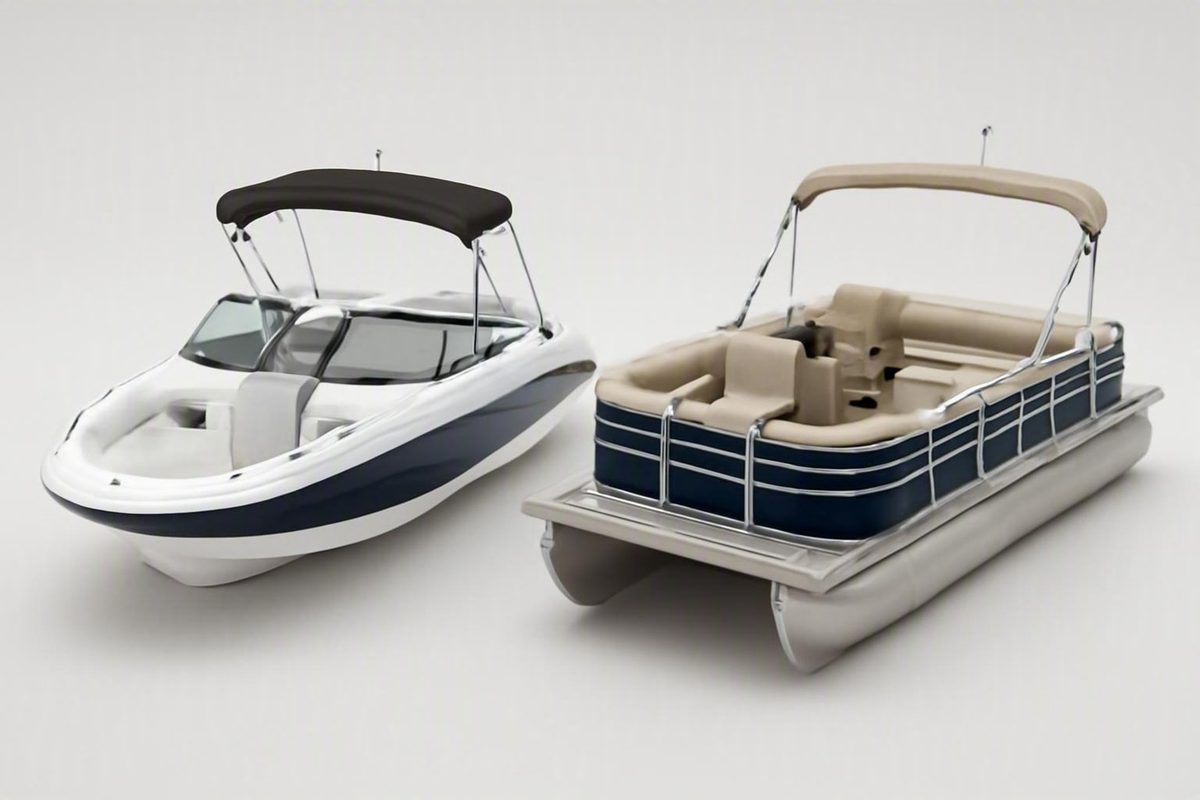
The deck boat vs pontoon boat decision is not about which design wins on paper. It is about which compromises best match how your family will use, transport, store, and pay for the boat.
A traditional two-tube pontoon generally favors open floor space, flexible seating, easy movement, and relaxed recreation. A deck boat generally favors more responsive turning, faster point-to-point cruising, and performance-oriented use. A tritoon adds a third tube beneath a pontoon-style deck, creating a middle option for buyers who want lounge space with stronger acceleration and more regular tow-sport capability.
All three can cruise, fish, swim, entertain, and tow when appropriately designed, powered, loaded, and equipped. The meaningful question is not “Can this category do the activity?” but “How well does this specific boat do it with our normal passengers, gear, water conditions, and ownership constraints?”
Their broad tendencies are useful starting points, but individual capacity plates, manufacturer documentation, local quotes, measurements, and loaded demonstrations should decide the purchase.
The short answer: choose by your dominant day on the water
Start with the experience that must work every time you launch:
- Choose a traditional two-tube pontoon first if your priorities are relaxed cruising, entertaining, fishing space, swimming, and comfortable movement around the deck.
- Choose a deck boat first if sharp turns, brisk cruising, frequent tubing, or skiing matter more than having the largest continuous floor.
- Consider a performance tritoon if you want pontoon-style lounges and walk-around room but expect stronger acceleration and more regular tow-sport use than a basic two-tube pontoon would ordinarily provide.
These are starting points, not verdicts. A lightly powered deck boat can be less capable for towing than a properly configured tritoon. A fishing pontoon can be less comfortable for entertaining than a lounge-oriented deck boat.
| Comparison point | Deck boat tendency | Two-tube pontoon tendency | Tritoon tendency |
|---|---|---|---|
| Flat floor space | More molded contours and divided seating areas | Usually the most obvious open, level walk-around space | Similar pontoon-style floor, although consoles and furniture affect usable room |
| Calm-water initial stability | Generally stable, with more conventional monohull movement | Broad, reassuring platform at rest and moderate speed | Broad platform with support from the center tube |
| Turning response | Usually sharper and more powerboat-like | Usually wider and flatter-feeling through turns | Often more composed at speed than a basic pontoon, but not identical to a V-hull |
| Performance potential | Strong candidate for quick acceleration and faster cruising | Usually optimized for moderate-speed recreation | Can offer substantial performance with the right tube and power package |
| Tow sports | Strong initial candidate for frequent tubing or skiing | Possible when appropriately rated, powered, and equipped | Stronger pontoon-style candidate for regular towing |
| Fishing | Useful molded storage; fishing layout varies widely | Open platform and flexible accessory placement can work well | Similar platform benefits, sometimes with added storage |
| Entertaining | Comfortable seating with more defined traffic paths | Strong fit for lounges, conversation, and movement between seats | Pontoon-style social space with greater performance potential |
| Storage pattern | Commonly under-seat and in-floor | Commonly under seats and within deck furniture or structures | Under-seat storage, with center-tube storage on some designs |
| Typical propulsion | Outboard or sterndrive | Usually outboard | Usually outboard; high-power or multiple-engine packages may be available |
Every result in the table is a general tendency, not a guarantee. Manufacturer guides show substantial variation in layouts, propulsion, and intended activities. Both categories can be configured for fishing, lounging, entertaining, cruising, and tow sports, as illustrated by Godfrey’s comparison of pontoon and deck-boat configurations.
The most useful first decision is whether you are buying a social platform that can perform, a performance-oriented family boat that still has room, or a pontoon-style platform deliberately configured for higher performance. That framing is more useful than assuming every pontoon is slow or every deck boat is cramped.
Hull design explains most of the difference
A deck boat generally uses one rigid V-style or modified-V hull. Its bow is wider than the pointed bow of a conventional runabout, creating additional seating and deck area while retaining conventional powerboat hull behavior. Fiberglass is common, although material and design exceptions exist.
A traditional pontoon carries a broad deck on two longitudinal tubes. A tritoon uses the same platform concept but adds a third tube, normally along the centerline. Aluminum tubes are common, but “fiberglass deck boat” and “aluminum pontoon” should not be treated as exceptionless definitions. The central distinction is a single shaped hull versus a deck supported by multiple tubes.
The wide bow is fundamental to the deck-boat concept. It expands passenger and storage space while retaining a running surface that can bank and carve through a turn more like a conventional runabout. Hurricane describes wide or flared bow forms transitioning toward a V-shaped running surface and notes that deck boats may use outboard or sterndrive power in its overview of deck-boat design.
A pontoon creates space differently. Instead of molding the interior around a single hull, the builder places a broad deck above the tubes. That generally makes it easier to arrange long lounges, gates, fishing seats, tables, coolers, and open traffic paths. Much of the interior can feel like one continuous room rather than a series of separate seating wells.
The structural trade-off affects more than appearance:
- Usable floor area: Pontoon construction generally preserves more continuous, level deck space.
- Furniture placement: Pontoon builders can often vary lounge and fishing arrangements without changing the underlying tube platform.
- Storage: A deck boat’s molded hull can accept lockers below the floor. Pontoon storage is more often built into seats, consoles, or other deck structures.
- Turning: A shaped monohull normally banks and responds differently from a broad deck carried on parallel tubes.
- Loading: Passenger position, fuel, gear, batteries, engines, and furniture affect how either design runs.
The tritoon deserves separate treatment rather than being placed in the same performance box as every two-tube pontoon. A center tube can add support and change weight distribution. Combined with lifting features, appropriate reinforcement, steering, and greater available power, it can produce a boat very different from a basic cruising pontoon. Bennington identifies the third tube as the defining distinction and associates it with additional support and speed capability, while the actual result remains package-specific in its pontoon and deck-boat guide.
That added tube does not transform the boat into a V-hull. Its value is that it narrows some traditional performance compromises while retaining much of the pontoon layout.
Space, capacity, storage, and boarding are four different questions
“Which has more room?” can mean at least four things:
- Which has more visible seating?
- Which has more space for people to walk?
- Which is rated to carry more people or weight?
- Which stores more gear without blocking the deck?
Those questions may produce different winners.
Usable movement space
Pontoons generally provide more obvious walk-around space. Their flat decks and flexible furniture arrangements can make it easier for passengers to change seats, anglers to reach different positions, and families to carry coolers, inflatables, tackle, or beach bags.
That advantage can disappear in a crowded layout. A large helm console, opposing lounges, portable toilet enclosure, tables, fishing chairs, and an oversized cooler can turn an apparently open pontoon into a narrow aisle. Inspect the boat with seat cushions in place, gates closed, and the table installed—not as an empty showroom platform.
Deck boats usually divide the interior more clearly into bow seating, helm and companion areas, cockpit lounges, and stern access. They may offer less uninterrupted floor, but molded compartments can keep bulky equipment out of the traffic path. In-floor lockers are particularly useful for skis, tow ropes, fenders, dock lines, and covers that might otherwise occupy seats or footwells.
Storage
Storage volume is not the same as storage usefulness. A deep compartment with a small opening may be frustrating for a large cooler or inflatable. A long ski locker may be excellent for tow gear but poor for tackle boxes. Wet equipment also needs suitable drainage and ventilation.
Common patterns include:
- Deck boat: Under-seat bins, side compartments, glove boxes, console storage, and in-floor lockers.
- Two-tube pontoon: Storage beneath lounges, within consoles, behind seat backs, or in freestanding deck furniture.
- Tritoon: The same pontoon storage patterns, with enclosed center-tube storage on some models.
Both types may include under-seat storage and ski lockers, while some tritoons use the center tube for additional storage, according to Barletta’s discussion of layout differences. Availability, opening size, drainage, and access still need to be checked on the actual model.
Conduct a “gear rehearsal” at the dealership. Decide where the anchor, dock lines, fenders, life jackets, cooler, tackle, tow rope, tube pump, skis, wet towels, shoes, cover poles, and emergency equipment will go. If the answer is “on a seat” or “in the aisle,” the boat may be functionally smaller than it looks.
Capacity
Visible seating does not establish permitted passenger capacity. Nor does a broad floor automatically mean that a pontoon carries more people or payload than a deck boat of similar length.
Check the individual capacity plate and manufacturer documentation. Account for people, fuel, batteries, coolers, ice, fishing equipment, water toys, tow gear, food, portable furniture, and accessories rather than looking only at the number of seats. Boatzon likewise notes that seating count does not establish safe capacity and directs buyers to the boat’s rated weight in its family-boat comparison.
Do not rely on a category-wide estimate. Two boats that appear equally roomy can have different ratings because their structures, flotation, engines, layouts, and equipment differ. Record the plate information for each finalist and build a realistic loading example before deciding.
Boarding and accessibility
There is no responsible category-wide accessibility winner. A pontoon may have a wide gate and level interior yet sit awkwardly above a particular dock. A deck boat may have a useful swim platform but require passengers to step down into a molded cockpit. Either can work well or poorly depending on the specific design and docking environment.
Inspect:
- Gate and walkway width
- Height from dock to deck or gunwale
- Number and height of steps
- Handhold placement
- Thresholds and deck transitions
- Passage around the helm
- Seat height and support
- Access when other passengers are seated
- Ladder depth and angle
- Space to turn or steady oneself
- Reboarding route from the water
Bring the people whose needs drive the purchase. A tape-measure specification cannot reveal whether someone can transfer into a seat, manage the ladder, or pass the helm while carrying a bag.
Handling, speed, stability, and chop should not be collapsed into one score
Boat comparisons often use “handling” as though it covers everything. It does not. At minimum, separate initial stability, dynamic handling, and rough-water ride.
Initial stability
The broad stance of a pontoon generally produces a reassuring platform for seated conversation, fishing, and movement at moderate speeds.
That does not establish superior control in wind, steep chop, closely spaced wakes, or open water. Stability at rest is a useful comfort characteristic, not a complete measure of seaworthiness.
Dynamic handling
Deck boats commonly plane, bank, and carve turns more like conventional powerboats. The shaped hull responds to trim, steering, and throttle in a manner familiar to drivers accustomed to bowriders or runabouts.
A two-tube pontoon typically turns with a flatter attitude and may require a wider path. A performance tritoon can respond more decisively, particularly when its center tube, lifting surfaces, steering, and engine package are designed together. It should still be evaluated on its own terms rather than assumed to feel exactly like a V-hull.
There is no useful universal speed range. Acceleration and maximum speed depend on hull or tube design, length, engine, propeller, gear ratio, trim, fuel, passenger load, equipment, weather, elevation, and water conditions. Category-wide speed claims are poor substitutes for a loaded demonstration.
Ride in chop
The available comparisons do not settle rough-water performance at the category level. Some deck-boat sources favor a V-style hull for entering and cutting through chop, while pontoon manufacturers sometimes favor the ride characteristics of widely spaced tubes. These competing commercial claims are not controlled comparisons of matched boats at equal length, power, load, trim, and speed.
Variation within each category is substantial. A performance tritoon may manage wakes and moderate chop very differently from a basic two-tube boat. Likewise, not every deck boat has the same deadrise, bow shape, freeboard, weight, or operating limitations. Individual deck-boat reviews also report differing rough-water abilities, reinforcing why the category label alone is insufficient across Boat & Sail Magazine’s model assessments.
Treat any claim of a universally “smoother ride” skeptically unless the comparison identifies:
- Exact models
- Passenger and gear loads
- Wave height and spacing
- Direction relative to wind and waves
- Test speed and trim
- Driver inputs
- Relevant hull or tube packages
The most useful evaluation is an on-water demonstration of comparable boats. Match length, power, equipment, fuel, and passenger load as closely as possible. In representative conditions, cross normal wakes at several sensible angles and speeds. Note impact, spray, bow movement, steering correction, passenger comfort, visibility, and whether unsecured gear shifts.
Do not seek severe weather for a trial. The objective is to reproduce the conditions in which you expect to operate, not to discover the boat’s limits with your family aboard.
Best boat by activity: entertaining, fishing, swimming, cruising, and tow sports
Most families do several things aboard, but not with equal frequency. Rank activities in three groups:
- Must do well every outing
- Should do acceptably several times a season
- Would be nice in theory
That exercise prevents an occasional ambition—such as skiing twice a year—from outweighing the layout you will use every weekend.
Entertaining and relaxed cruising
A pontoon is usually the strongest first candidate for social outings. Flat floor space, long lounges, flexible seating, and easy movement allow people to face one another, change seats, reach a cooler, or move between bow and stern without negotiating deep cockpit transitions.
A deck boat can still entertain well, especially when it has wraparound seating, shade, a table, and a usable stern platform. Its social areas tend to be more defined, and traffic may pass through narrower points around the helm or cockpit.
For either type, inspect the boat with the table installed and every normal seat occupied. Check whether the driver can see, passengers can move without climbing over knees, and the cooler has a home that does not obstruct a gate or passage.
Fishing
A pontoon can provide an excellent open platform for multiple anglers, rod holders, removable seats, livewells, tackle storage, and accessory mounting. Its flat deck may also make it easier to move between fishing positions.
A deck boat may offer better concealed storage for rods and gear, but a lounge-focused model can be awkward to fish from. Upholstery, windshields, rails, tow hardware, and swim platforms can interfere with casting or landing fish.
Fishing-specific layout matters more than the category label. Look for:
- Practical casting separation
- Rod storage that protects tips
- Tackle access with seats occupied
- Livewell location and capacity
- Washdown and drainage
- Mounting provisions for electronics
- Battery access
- A workable place to land and handle fish
- Flooring and upholstery suited to the intended use
The correct choice for a serious angler may be a fishing pontoon or fishing-oriented deck boat, not the most luxurious general-purpose example of either.
Swimming
Do not assume that a flat pontoon deck automatically means easier swimming access or that every deck boat has a better platform. Compare the whole route from seat to water and back again.
Inspect the stern gate or passage, platform width, ladder length, rung shape, handholds, engine position, tow hardware, and separation between the ladder route and propulsion equipment. If the seller permits an in-water trial, evaluate reboarding under appropriate conditions rather than judging the ladder only from the showroom floor.
A sterndrive deck boat may provide an integrated stern platform, while an outboard occupies physical and visual space at the transom. Pontoon stern layouts also vary: some provide a broad platform around the outboard well, while others leave a narrow route beside the engine.
Tubing, skiing, and other tow sports
A deck boat is generally the stronger initial candidate when quick acceleration, sharper turns, and frequent towing dominate the purchase. Its hull behavior can make the driving experience more responsive when accelerating or changing direction.
A sufficiently powered and properly configured tritoon can also support regular tubing and skiing. Even a two-tube pontoon may tow in an appropriate configuration, but buyers should not infer suitability from the presence of a tow bar or from one generic horsepower figure. Adequately powered pontoons can tow tubes and skiers, but the broader handling differences remain, as noted in Better Boat’s activity comparison.
Confirm for the exact boat:
- Maximum horsepower rating
- Installed engine and propeller
- Performance with the expected passenger load
- Manufacturer-approved tow point
- Manufacturer guidance for the intended activity
- Visibility from the helm
- Wake characteristics
- Low-speed response when retrieving participants
Confirm the intended use against the boat and propulsion manufacturers’ documentation rather than assuming approval for one activity covers all of them.
Four practical buyer scenarios
The calm-lake host: Most outings involve a large social group, food, swimming, conversation, and moderate-speed cruising. A lounge-oriented two-tube pontoon is the logical first inspection, provided its rated capacity, storage, propulsion, and docking behavior fit.
The fishing-and-family buyer: Fishing happens in the morning, followed by swimming or cruising with the family. Compare a fishing pontoon’s open casting space with a fishing-oriented deck boat’s lockers and running behavior. The quality of the specific layout matters more than the category.
The performance-focused watersports family: Frequent tubing or skiing, faster runs between destinations, and responsive handling lead the list. Start with deck boats, then compare performance tritoons explicitly configured for the required activities.
The large group wanting room and acceleration: Long lounges and easy movement are non-negotiable, but the boat must also accelerate confidently under a realistic load. A performance tritoon is the natural middle candidate, subject to its capacity rating, propulsion documentation, ownership cost, and a loaded trial.
Propulsion can change the comparison as much as the hull label
Modern pontoons predominantly use outboards. Deck boats commonly offer outboard or inboard/outboard sterndrive configurations. That choice affects far more than speed.
Outboards
An outboard places the engine outside the hull at the transom. Broad advantages can include comparatively direct service access, lower installation weight in many applications, and responsive low-speed maneuverability.
The trade-off is stern space.
Sterndrives
A sterndrive places the engine within the hull and connects it to an external drive. This arrangement can leave a cleaner stern platform and keep the engine itself out of the swimming area.
It also consumes interior hull volume that might otherwise become storage or seating structure. The installation adds weight and mechanical complexity. Hurricane summarizes the trade-off as a cleaner stern balanced against additional weight, complexity, and reduced internal storage in its deck-boat propulsion overview.
High-power and multiple-engine packages
Some pontoons and tritoons accept high-output or multiple-outboard arrangements. These packages can materially change acceleration and cruising performance, narrowing the old stereotype of the slow pontoon. Twin-engine configurations can also increase purchase cost and mechanical complexity.
More power does not erase differences in windage, floor plan, turning attitude, or storage. Nor should a rated maximum or advertised engine output be treated as proof that the boat will provide satisfactory loaded acceleration for a particular activity.
Tow-sport buyers should ask for manufacturer documentation covering the exact propulsion package and approved tow point. Then run the boat with a representative load. A demonstration with one driver, minimal gear, and little fuel says less about performance with family, coolers, safety equipment, and tow gear aboard.
Purchase price is only one part of the ownership fit
The available evidence does not support a reliable category-wide claim that a deck boat, two-tube pontoon, or tritoon is always cheaper to buy or own. Both major categories span broad price and equipment levels, and propulsion can change the package cost substantially. Rightboat similarly concludes that no useful blanket price comparison is possible because both types cover wide market ranges in its ownership comparison.
Avoid comparing an advertised hull price for one boat with a ready-to-launch package for another. Request written, same-date quotes for candidates of comparable length and intended performance. Each quote should identify:
- Engine and propeller
- Trailer inclusion and specifications
- Electronics
- Battery system
- Cover
- Seating or furniture package
- Shade system
- Docking equipment
- Required safety equipment
- Freight, preparation, and destination charges
- Taxes and registration
- Warranty coverage
- Dealer-installed options
Total-cost worksheet
Fill in the same period—preferably the first full year and a typical later year—for every finalist.
| Cost item | Deck boat | Two-tube pontoon | Tritoon |
|---|---|---|---|
| Purchase price | ______ | ______ | ______ |
| Tax and registration | ______ | ______ | ______ |
| Trailer | ______ | ______ | ______ |
| Tow-vehicle changes or requirements | ______ | ______ | ______ |
| Insurance quote | ______ | ______ | ______ |
| Estimated seasonal fuel | ______ | ______ | ______ |
| Scheduled engine service | ______ | ______ | ______ |
| Hull or tube cleaning and care | ______ | ______ | ______ |
| Winterization | ______ | ______ | ______ |
| Slip, dry stack, or home storage | ______ | ______ | ______ |
| Cover and cover support | ______ | ______ | ______ |
| Electronics and accessories | ______ | ______ | ______ |
| Fishing or tow-sport equipment | ______ | ______ | ______ |
| Repair allowance | ______ | ______ | ______ |
| Estimated total | ______ | ______ | ______ |
Use actual local quotes rather than broad online averages. Insurance, storage, labor, fuel access, and service availability vary by location, boat, engine, use, and owner.
Maintenance differences
Fiberglass deck-boat surfaces may require polishing or waxing to maintain their finish. Both types still require cleaning and powerplant maintenance, a distinction also made in Rightboat’s comparison.
For either design, obtain the model-specific schedule for:
- Engine and drive service
- Propeller inspection
- Battery care
- Steering and control checks
- Cleaning and upholstery care
- Fastener and structural inspection
- Trailer maintenance
- Covering or protected storage
- Winterization where applicable
For saltwater use, obtain written confirmation that the exact boat, engine, hardware, trailer, and warranty are suitable. A category label alone does not establish corrosion protection or manufacturer approval.
Trailering and storage
A broad pontoon platform can require substantial trailer and storage space, but actual dimensions matter more than category assumptions. Record overall length on the trailer—not just hull length—along with beam, height, motor position, guide posts, ladder projections, and tongue configuration.
Build the expected loaded trailer figure using:
- Boat
- Engine or engines
- Trailer
- Fuel
- Water, if carried
- Batteries
- Electronics
- Anchor and safety equipment
- Fishing or tow gear
- Coolers and normal cargo
- Dealer-installed accessories
Compare the resulting figure with the ratings and instructions supplied by the tow-vehicle, hitch, and trailer manufacturers.
Before buying, physically check:
- Home gate and driveway turns
- Garage door and interior dimensions
- Launch-ramp width, depth, and grade
- Parking and staging space
- Slip width and permitted overhang
- Marina rules
- Bridge or overhead clearance
- Winter-storage availability
- Local service support for the engine and boat
The boat with the best showroom layout can still be the wrong purchase if it cannot fit through the gate, launch at the local ramp, or be serviced within a practical distance.
Use an inspection and test drive to make the final decision
A sea trial should confirm the boat’s suitability, not serve as a brief joyride after the purchase terms are effectively settled.
Before visiting the dealer
Write down:
- Normal number of adults and children
- Maximum group you realistically expect
- Combined passenger and cargo estimate
- Coolers, fishing gear, tow gear, and other normal cargo
- Activities that must work every outing
- Typical water conditions and route length
- Maximum purchase and annual ownership budget
- Tow-vehicle and hitch limits
- Gate, garage, slip, and storage dimensions
- Non-negotiable boarding or mobility needs
- Preferred propulsion and local service options
This prevents attractive upholstery or a dramatic engine package from displacing the requirements that brought you to the dealership.
At the dock or showroom
Inspect the boat as though you were halfway through a busy day. Open every storage compartment. Sit in every position. Install the table. Raise and lower the shade. Walk from bow to stern with seats occupied.
Check:
- Boarding route and handholds
- Gates, thresholds, and deck transitions
- Seat support and foot placement
- Visibility from the helm
- Movement around the helm and companion seat
- Storage-opening size
- Drainage and ventilation
- Cooler location
- Life-jacket accessibility
- Tow-gear storage
- Ladder deployment and use
- Engine and battery access
- Access to routine service points
- Cover installation
- Anchor and dock-line storage
Then verify the capacity plate, maximum horsepower, manufacturer ratings, trailer specifications, warranty terms, service schedule, and any freshwater or saltwater restrictions for that model.
During the sea trial
Load the boat as realistically as the seller allows. Ideally, bring the normal decision-making passengers rather than testing with only a salesperson. Account for fuel and ask how the demonstration load compares with your intended use.
Evaluate:
- Low-speed tracking
- Forward-to-reverse response
- Acceleration with passengers aboard
- Visibility as the bow rises and the boat planes
- Comfortable cruising behavior
- Turns in both directions
- Steering effort and feedback
- Wake crossings at sensible angles
- Passenger movement underway
- Noise, vibration, spray, and rattles
- Reboarding from the water
- Docking and reverse control
If conditions and the seller permit, dock in representative wind. Neither should be judged from a calm-water, straight-line run alone.
Compare finalists at similar length, power, load, and equipment. A basic two-tube pontoon should not be expected to match a high-powered deck boat’s acceleration. Conversely, a modest deck boat should not be used to represent the room, finish, or performance of a large luxury tritoon.
Frequently asked questions
Is a deck boat faster than a pontoon boat?
A deck boat is generally the stronger initial candidate for faster cruising, quick planing, and sharper turns than a traditional two-tube pontoon. That is a tendency, not a guaranteed result.
A performance tritoon with an appropriate tube package and substantial power may accelerate and cruise very differently from a basic pontoon, narrowing or sometimes reversing an assumed category gap. Actual results depend on the specific hull or tubes, engine, propeller, load, trim, fuel, water, and weather.
Compare published performance information only when the test conditions are clear, then verify it with a realistic passenger and gear load. Do not treat an unloaded dealer run or a category-wide speed claim as the expected family result.
Is a deck boat or pontoon better in choppy water?
There is no universal category winner. A V-style deck-boat hull and a pontoon or tritoon platform interact with waves differently, but the supplied comparisons do not include controlled testing that settles the issue across all designs.
A performance tritoon, basic two-tube pontoon, shallow-V deck boat, and heavier deck boat can each react differently. Length, weight, freeboard, bow form, tube geometry, load distribution, trim, speed, and wave spacing all matter.
Test comparable boats in representative—not severe—conditions. Cross normal wakes at several sensible angles and speeds while noting impact, spray, visibility, steering correction, and passenger comfort. High stability at the dock does not by itself establish rough-water control or seaworthiness.
Can a pontoon boat pull a tube or water skier?
Yes, some pontoons can pull tubes or skiers when the exact boat is appropriately designed, powered, propped, loaded, and equipped with an approved tow point. Performance tritoons are generally the stronger pontoon-style candidates for frequent tow sports.
Do not buy based on a generic horsepower recommendation. Ask the manufacturer or dealer to confirm the intended activity for the exact model, engine, propeller, and tow hardware. Then test acceleration with a realistic passenger and gear load.
Also distinguish among activities. Suitability for recreational tubing does not automatically establish suitability for skiing, wakeboarding, or surfing. Confirm each intended use against the relevant boat and propulsion documentation.
Does a pontoon boat hold more people than a deck boat?
Not necessarily. A pontoon generally provides more visible floor space and may offer more seating or easier movement, but those qualities do not establish a higher permitted passenger or payload rating.
Use the individual capacity plate and manufacturer documentation. Consider people, fuel, batteries, coolers, fishing equipment, tow gear, and other cargo rather than comparing seat count alone.
For practical comfort, consider more than the stated maximum. Ask whether passengers can sit with support, move safely, reach storage, and use boarding paths without crowding.
What is the practical difference between a pontoon and a tritoon?
A traditional pontoon has two supporting tubes beneath its deck; a tritoon adds a third tube, normally along the centerline. That additional structure can change support and weight distribution and can form part of a more performance-oriented package when combined with suitable lifting features, reinforcement, steering, and power.
In practical terms, a two-tube pontoon often suits moderate-speed cruising, fishing, swimming, and entertaining. A tritoon is usually the more relevant pontoon-style option when the buyer also wants stronger acceleration, more regular tow sports, or more composed higher-speed operation.
It does not make the boat handle exactly like a deck boat or establish a universal capacity advantage. Compare both under the same realistic load and use the individual capacity plate, propulsion package, storage fit, and on-water performance to decide.
Make the final choice by the required experience
There is no universal winner.
Choose a traditional two-tube pontoon when spacious, stable, relaxed recreation defines the day. Choose a deck boat when responsive handling, brisk point-to-point cruising, and frequent performance-oriented use come first. Choose a performance tritoon when pontoon-style room is essential but stronger acceleration and more regular tow-sport capability also matter.
The final rule is simple: buy the specific boat that performs the required jobs under the expected load and conditions—not the category that wins the most generic comparison rows.
Base the purchase on the exact capacity plate, propulsion package, manufacturer guidance, loaded trailering requirements, storage fit, local service access, and an on-water trial with a realistic passenger and gear load. Obey the boat’s limits, monitor weather and water conditions, and wear an appropriate life jacket.